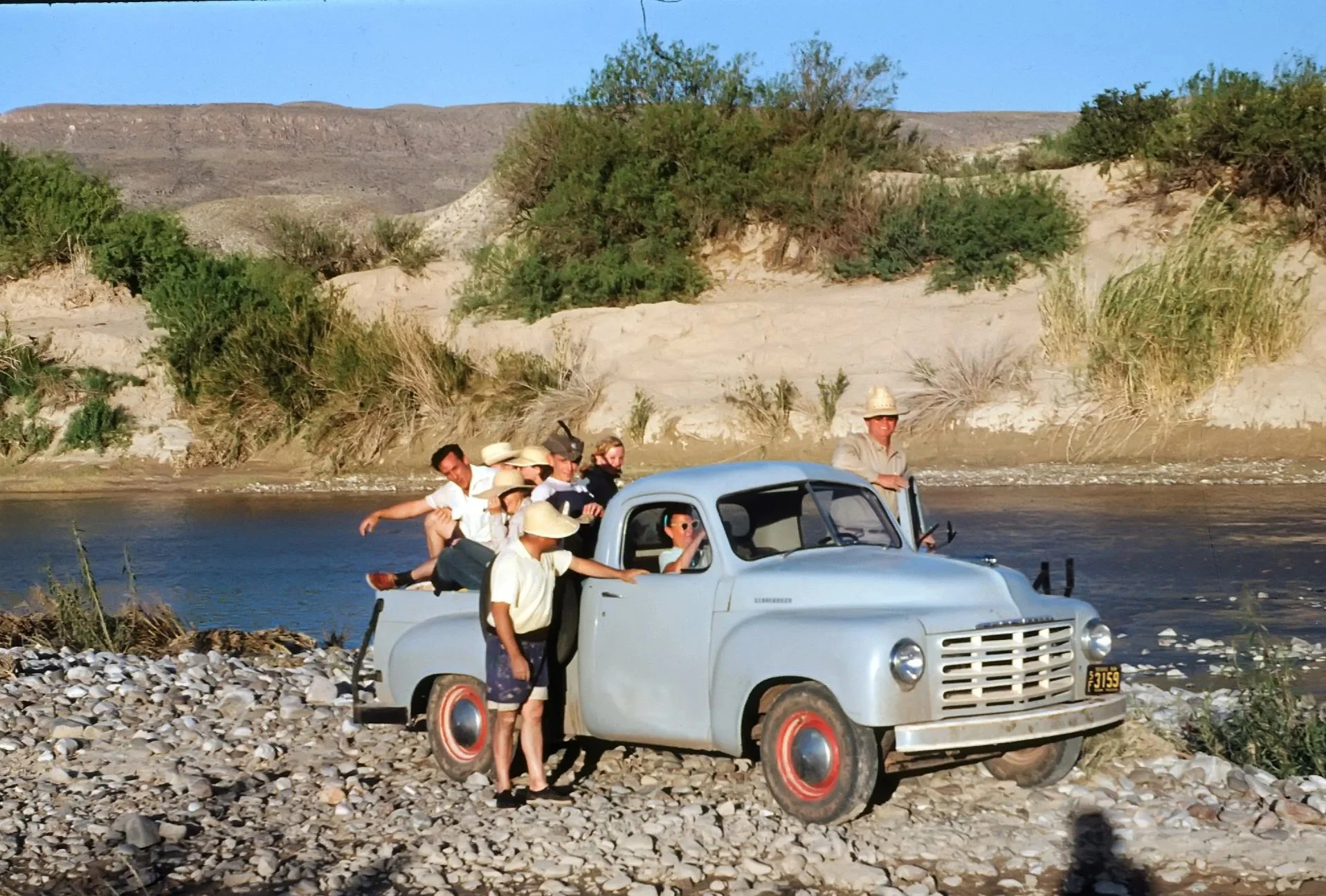
Hop in! There’s room for you in this old pickup as park staff and neighbors set off to explore Big Bend.
Click to right of photo to start slide show.
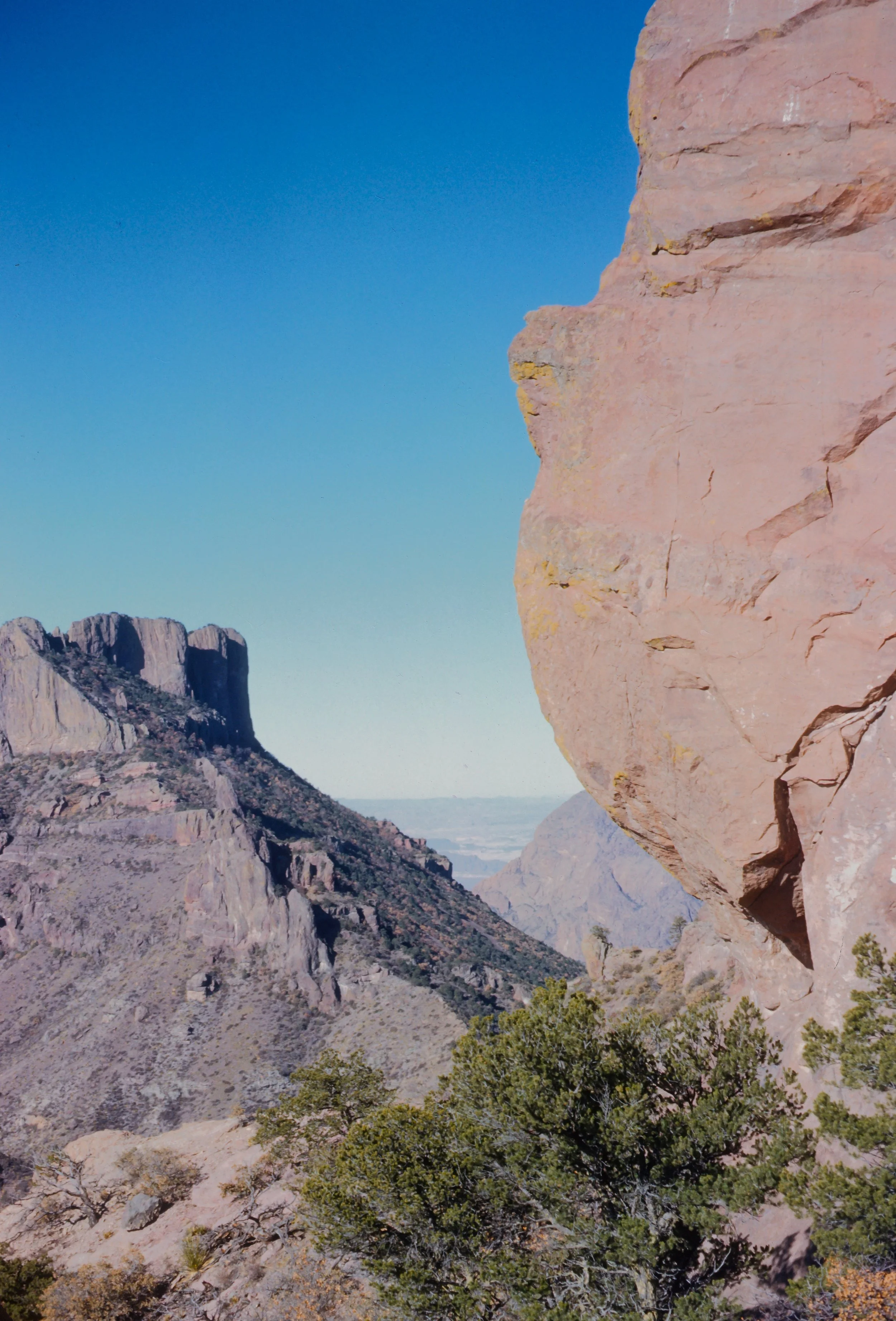
The Big Bend region, Aileen was told when she accepted a job teaching there, was a place where even a Texas Ranger feared to go alone.
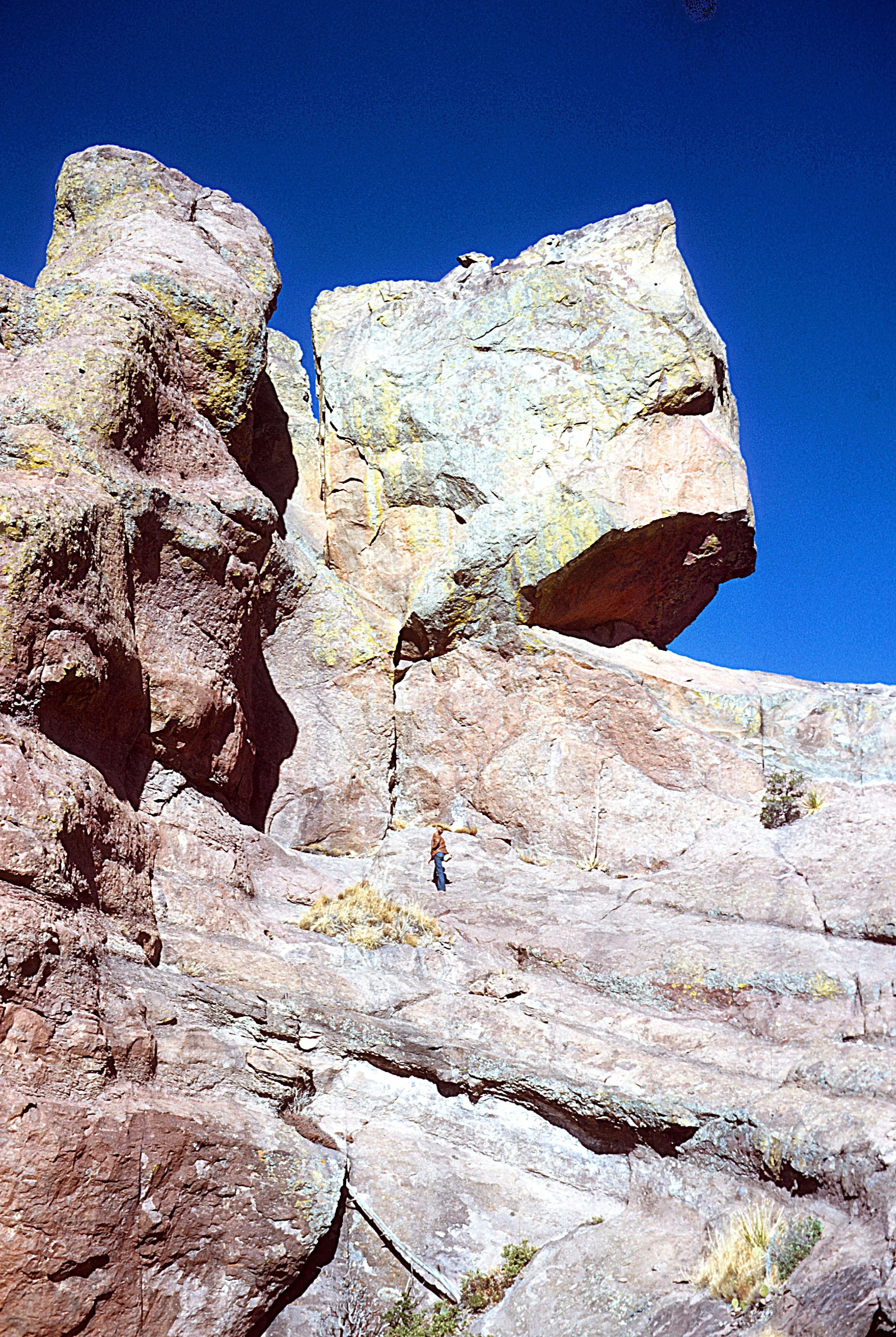
Can you spot the boy in the middle of this photo? Lost Mine Trail, January 1954.
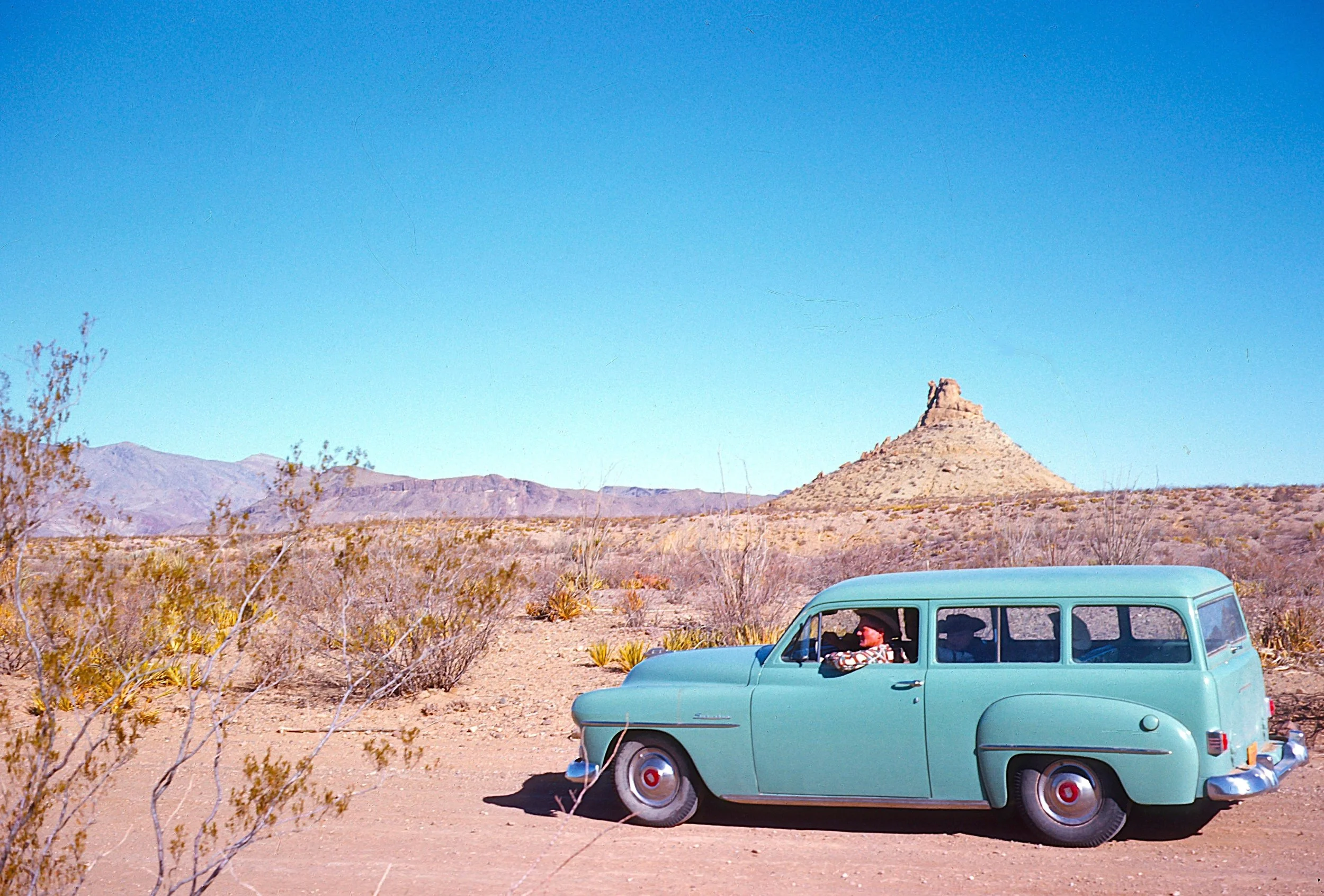
A local family heads to town. This is a car full of cowboy hats.
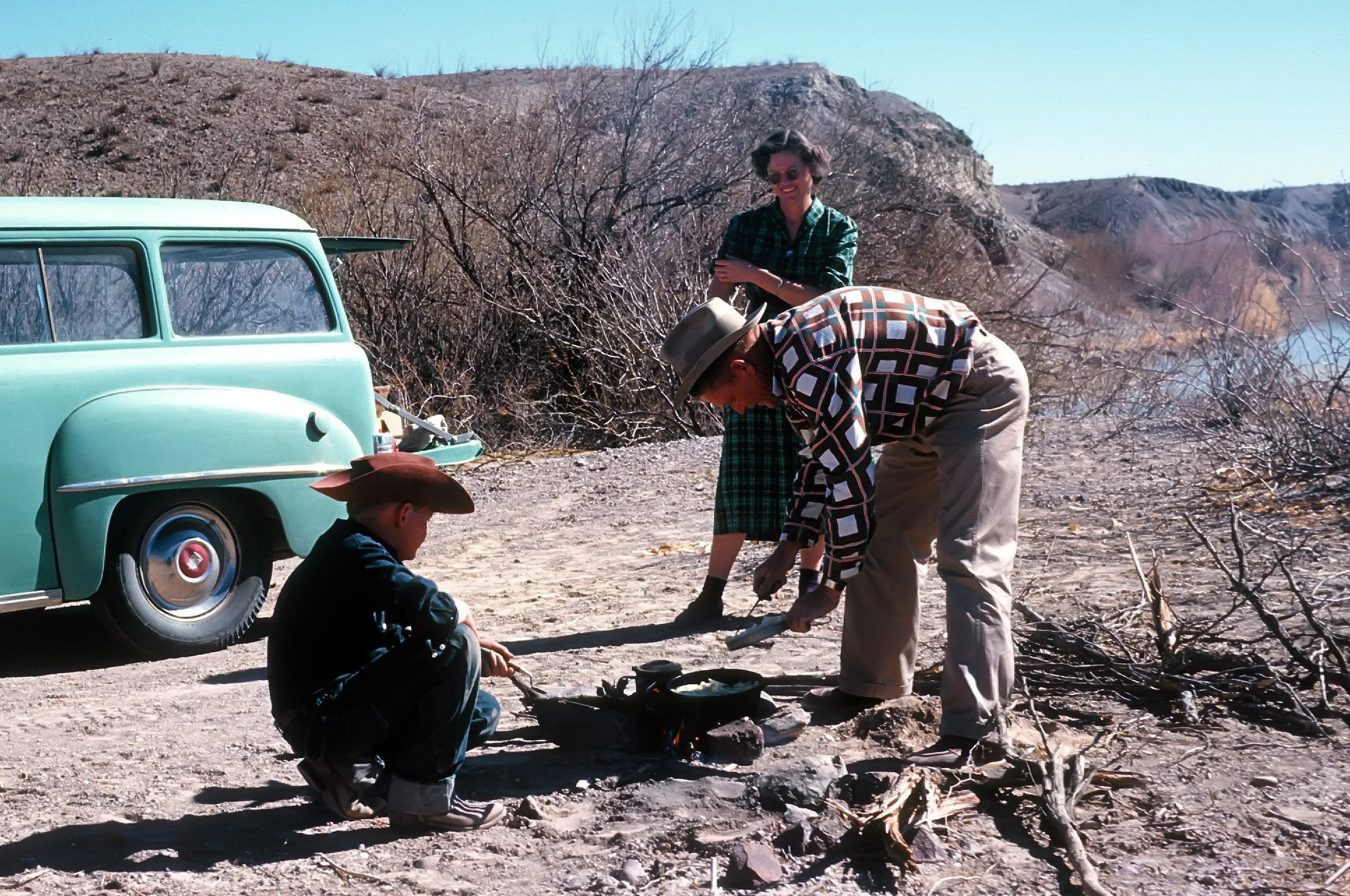
Stopping for lunch. The fire is hot and the potatoes are frying. But don't do this today!
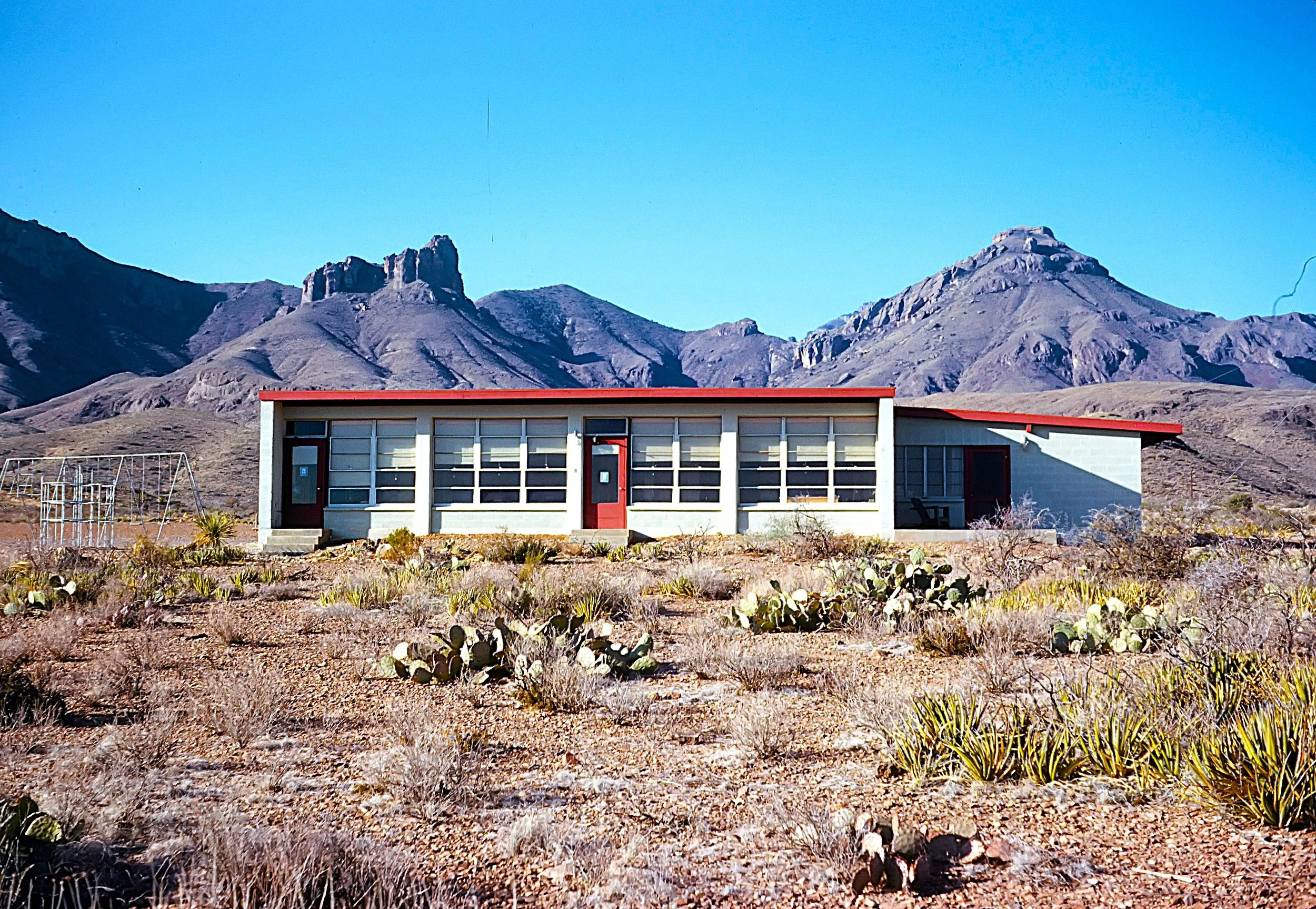
San Vicente school where Aileen taught. She also lived at the school.

Aileen was very proud of her students, their hard work, their achievements, and how they welcomed her into their lives.

The playground at Aileen's school. You can read more about her adventures in Big Bend in her book Tenderfoot Teacher.

Aileen's groceries were delivered once a week by Willie, who drove several hours from his store to deliver to the park. Here, he's just unloaded her food box.

This slide label says that Bill is studying spelling in the schoolyard before going in to class. He must have had a test coming up!
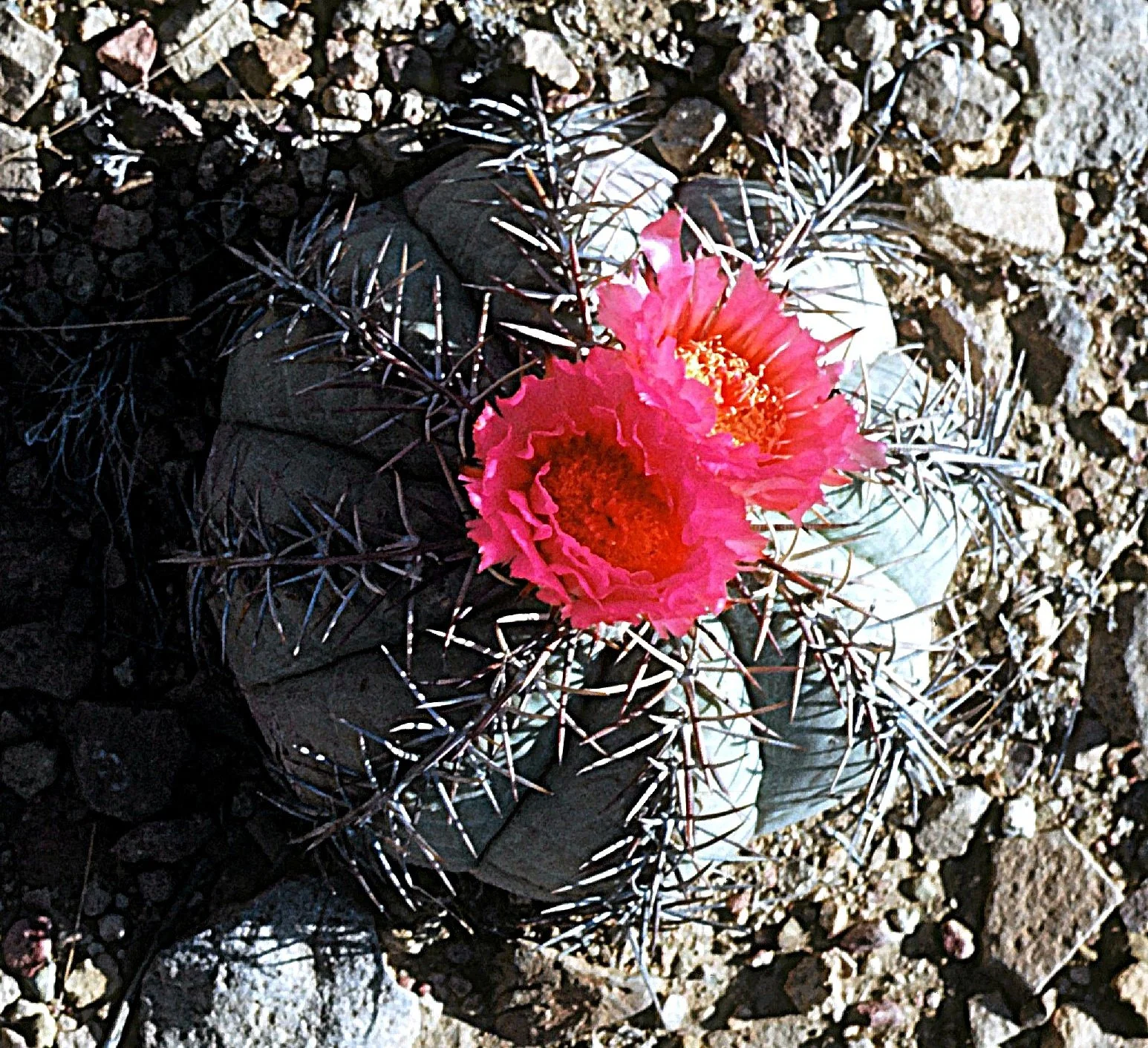
“Everything in Big Bend stings, sticks, or stinks,” Aileen was told when she arrived at the park.
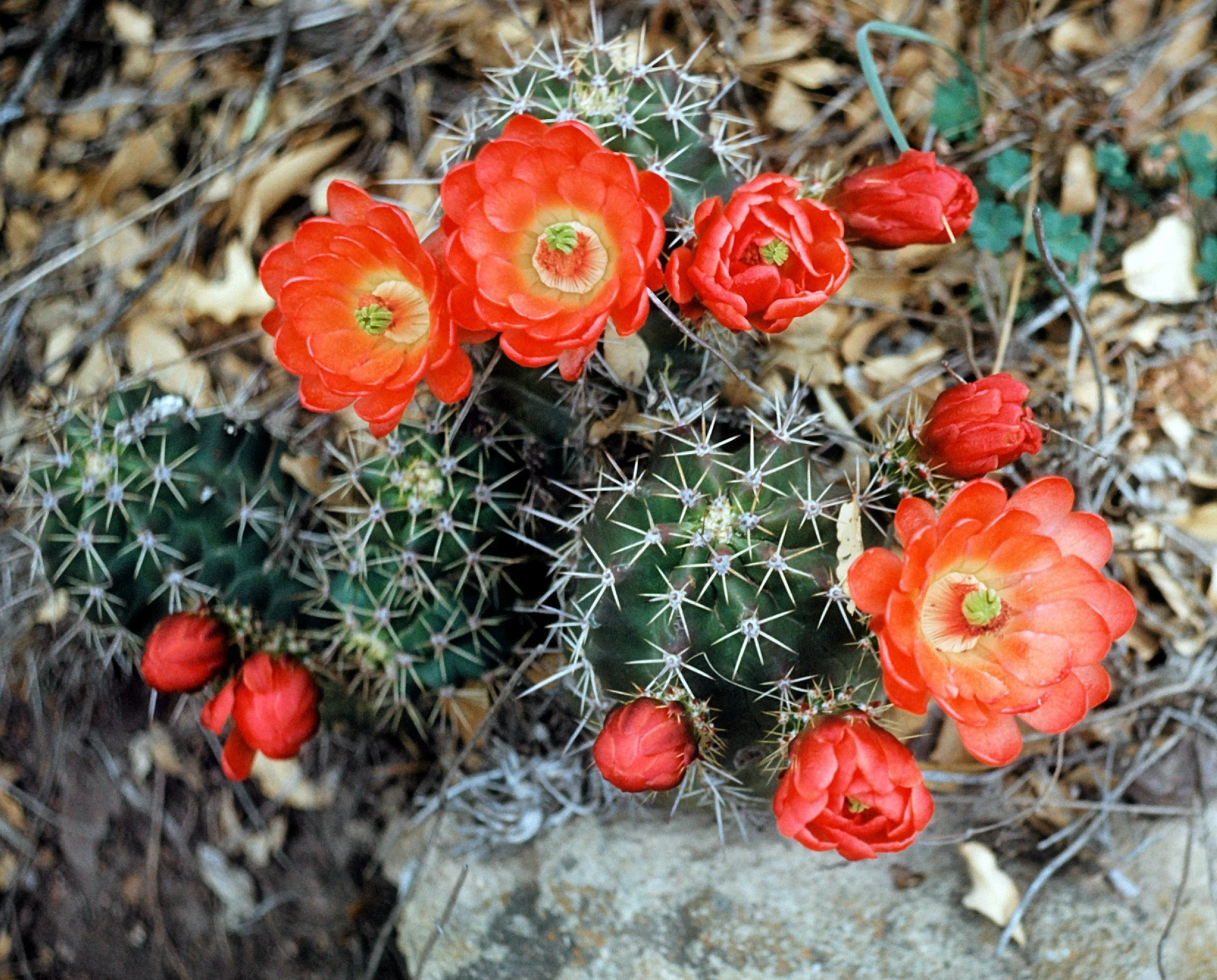
But she found a world of beauty, in spite of what she was told.
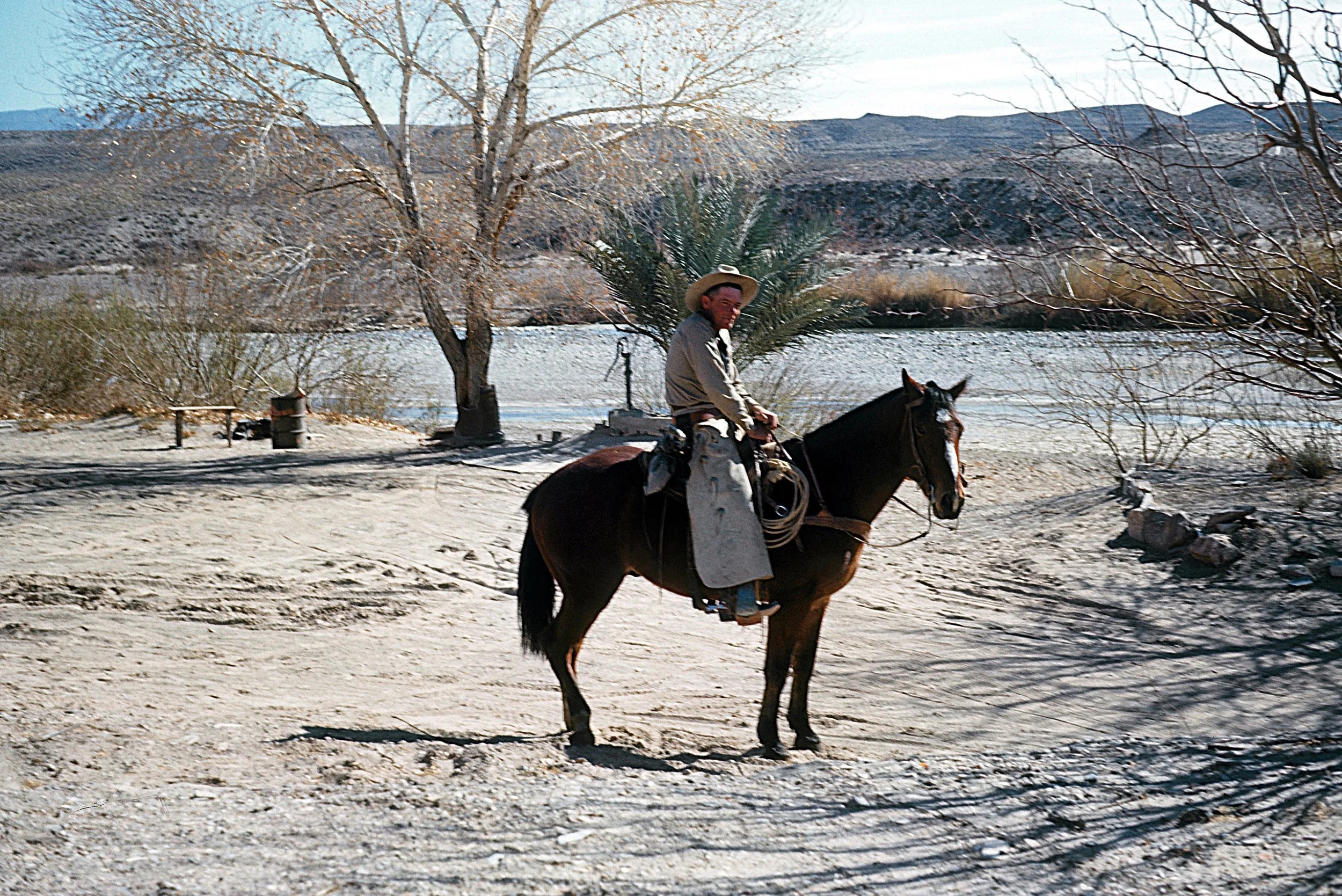
A government River Rider on patrol, watching for cattle with hoof-and-mouth disease. Across the Rio Grande is Mexico. Photo taken at Lower Hot Springs, Jan. 1954.
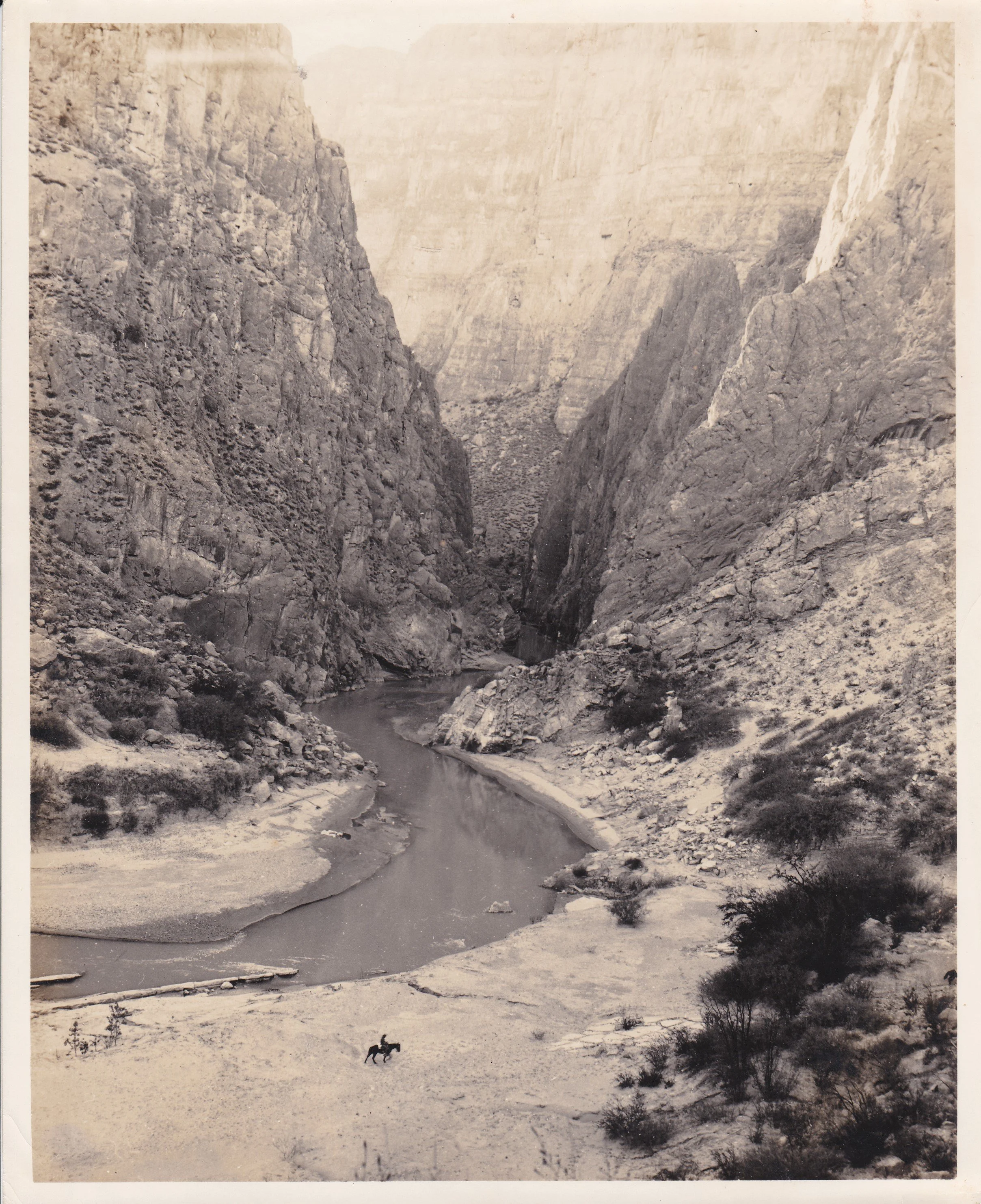
Immense cliffs tower over a River Rider: Mexico on one side, U.S. on the other. Photo by Glenn Burgess.
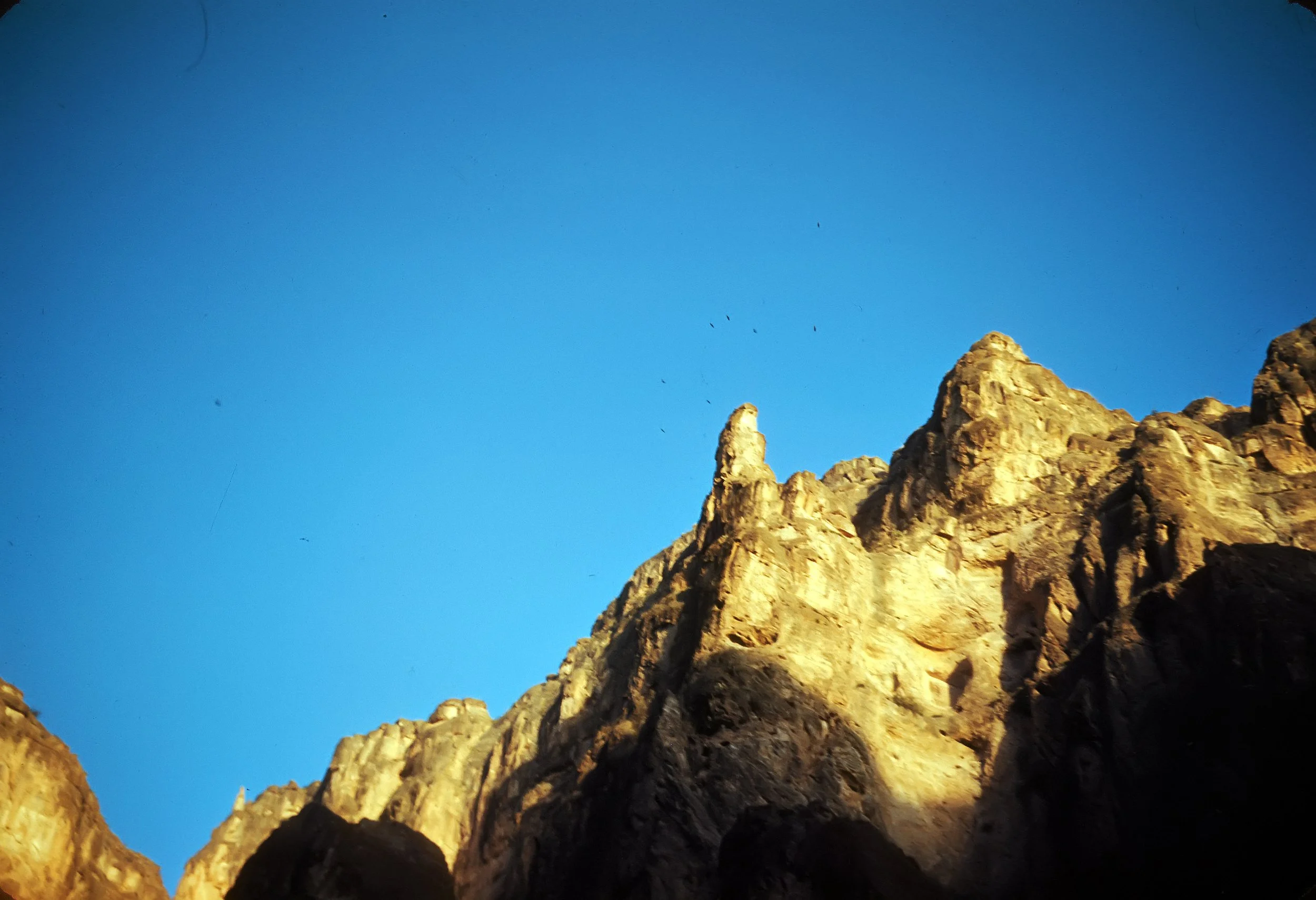
In 1953 Aileen decided to buy a camera that could take color slides instead of the more common black-and-white film. She wanted to show the vivid colors of Big Bend. Although these pictures are three-quarters of a century old, the colors are still bright.

Etta Koch with daughter Patti, April 1954. Etta lived at Hot Springs, painted murals, and worked for the National Park Service. Her husband was well-known photographer Peter Koch.
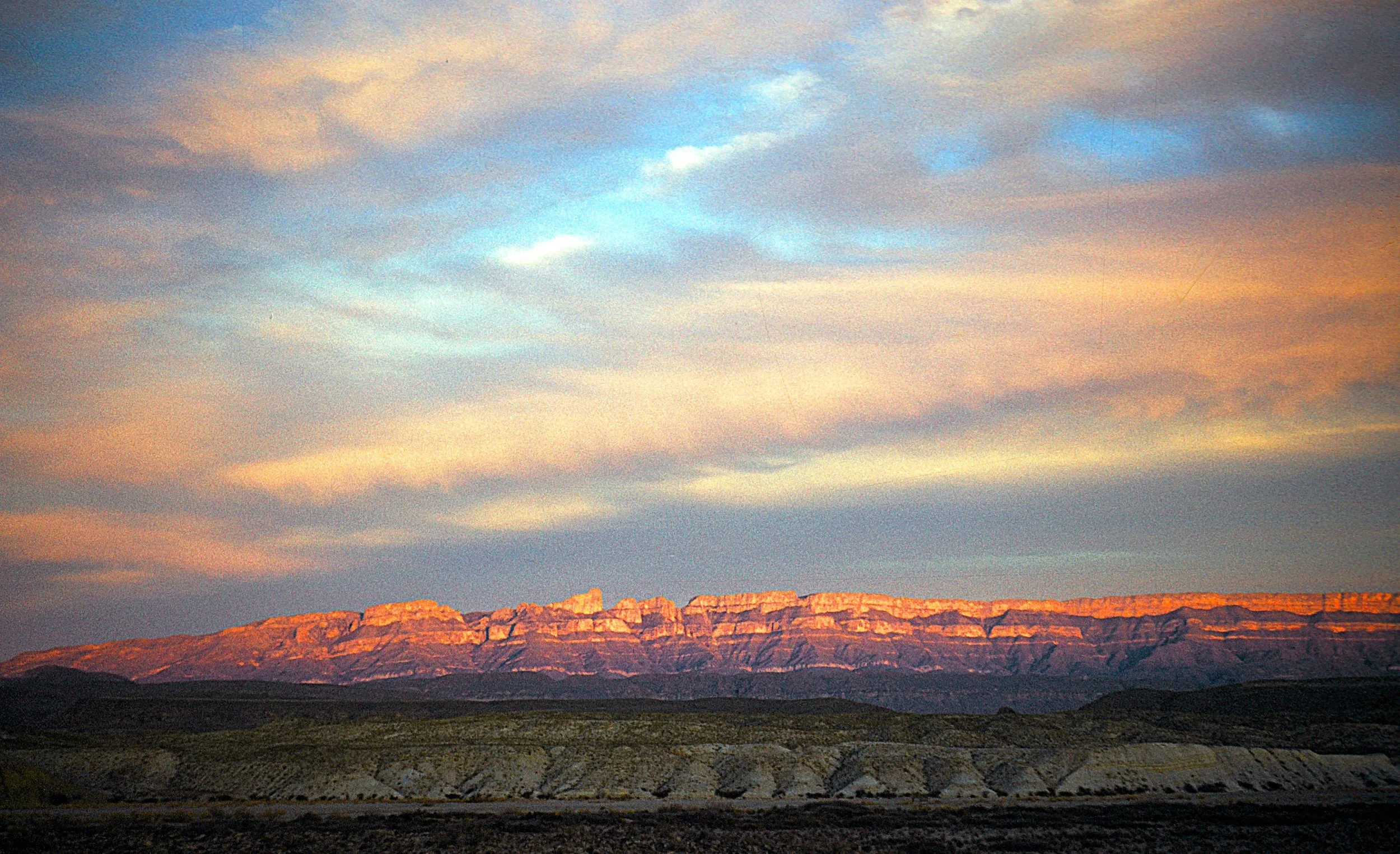
Sunrise on the Sierra del Carmen, across the Rio Grande in Mexico. Etta Koch (see previous photo) said that these mountains reminded her of a pink layer cake.
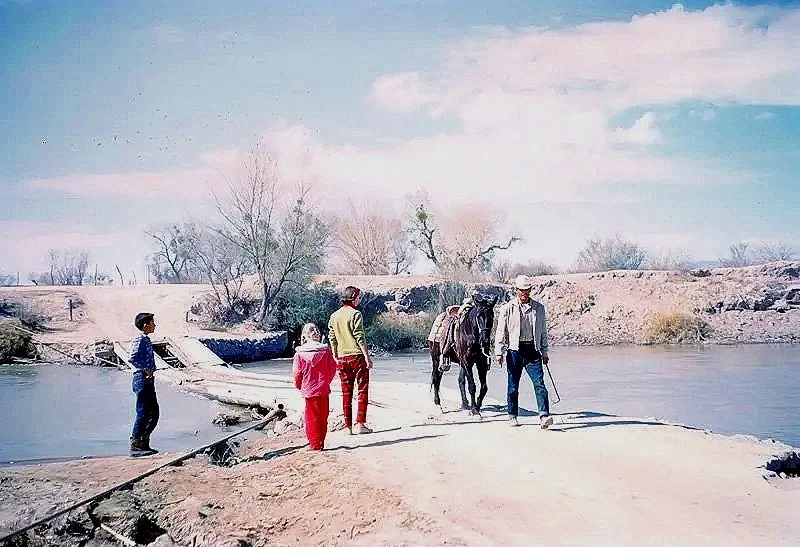
Aileen and daughter await their turn to cross the Rio Conchos bridge at Ojinaga, Mexico, near Big Bend. Taken when Aileen revisited the park in Jan. 1965.
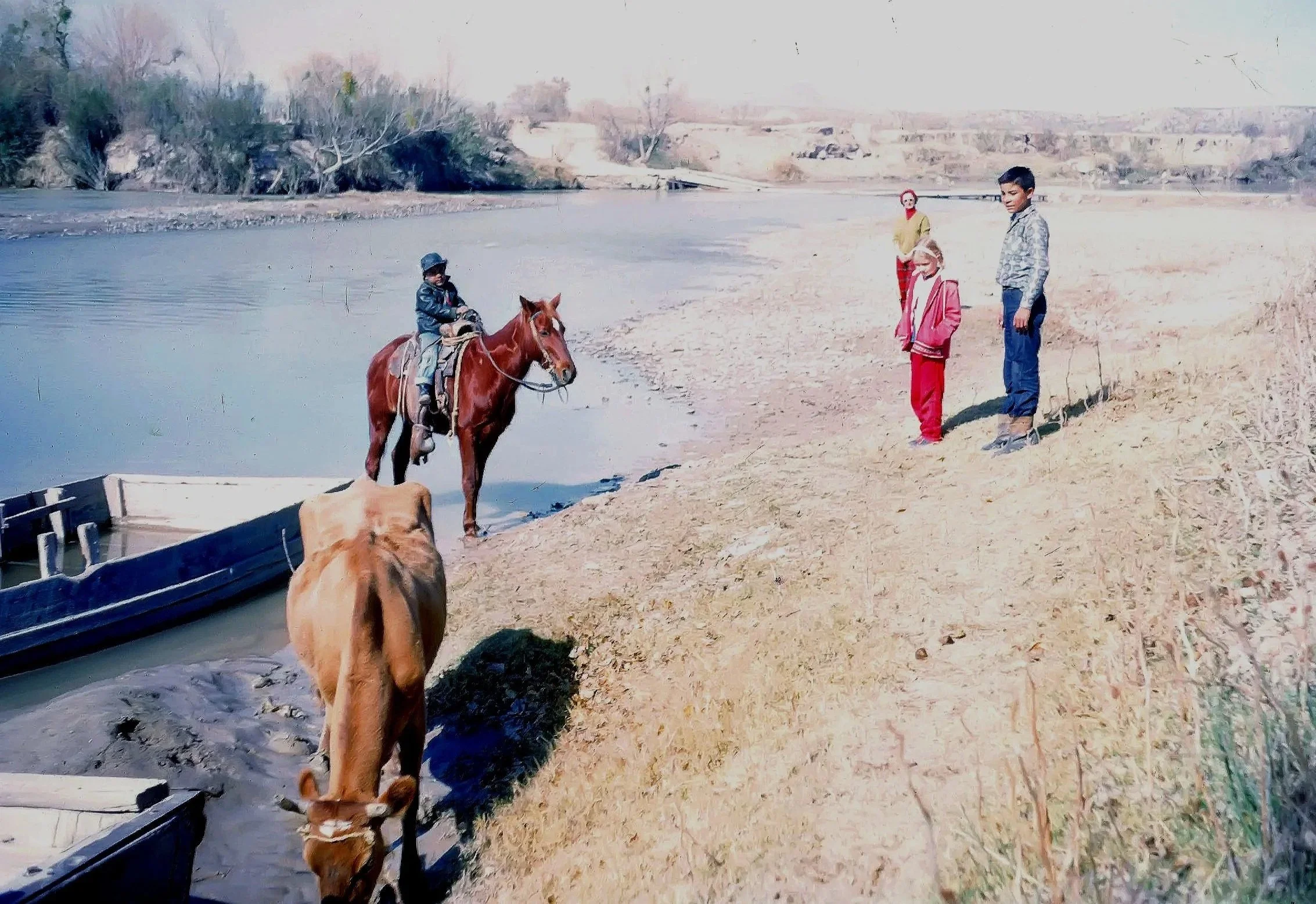
The young cowboy on the horse explained that his job was to follow the cow and keep her out of trouble. January 1965.
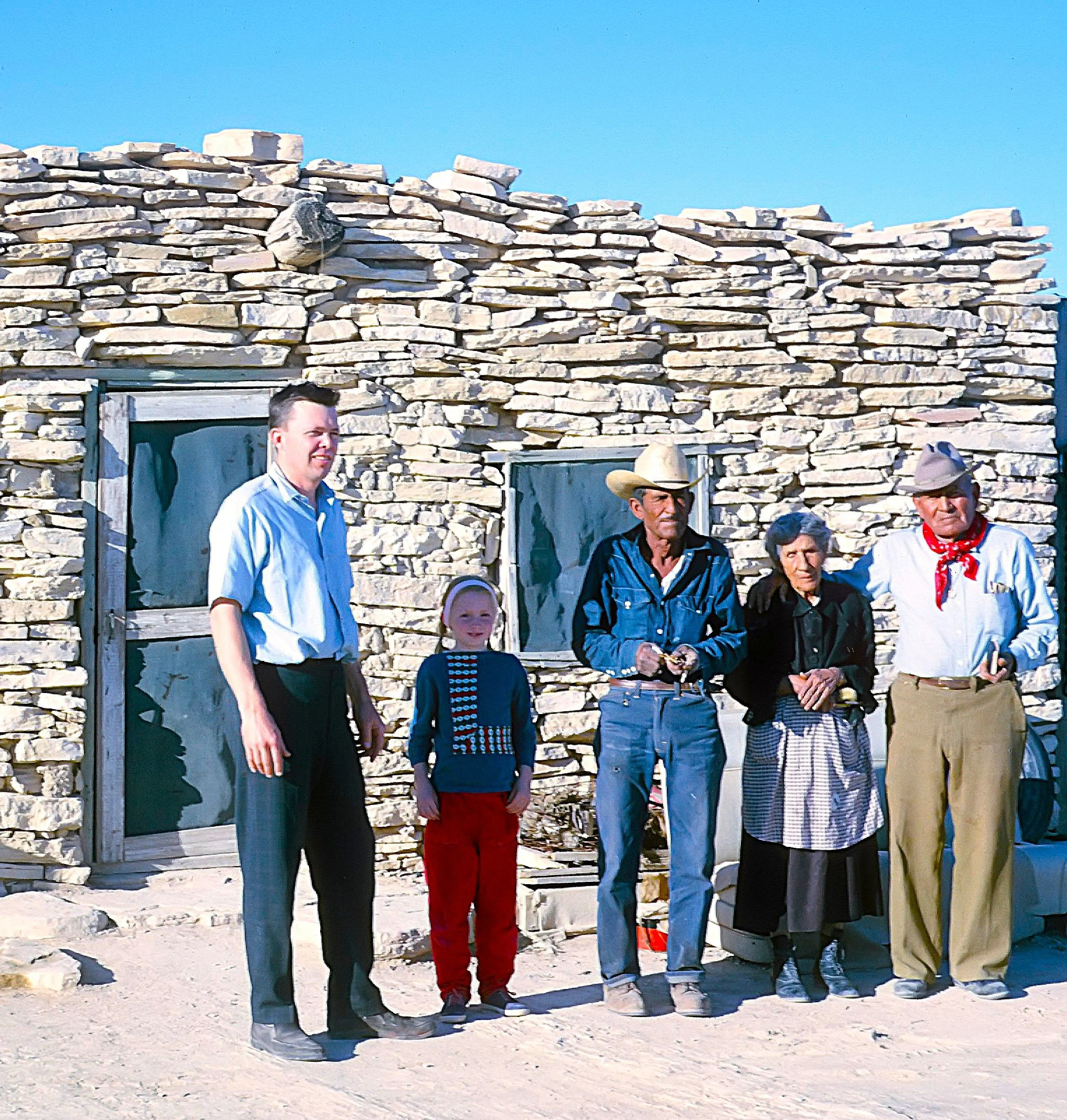
Grandparents of one of Aileen's students at their home in Terlingua, with Aileen's husband and daughter, January 1965.
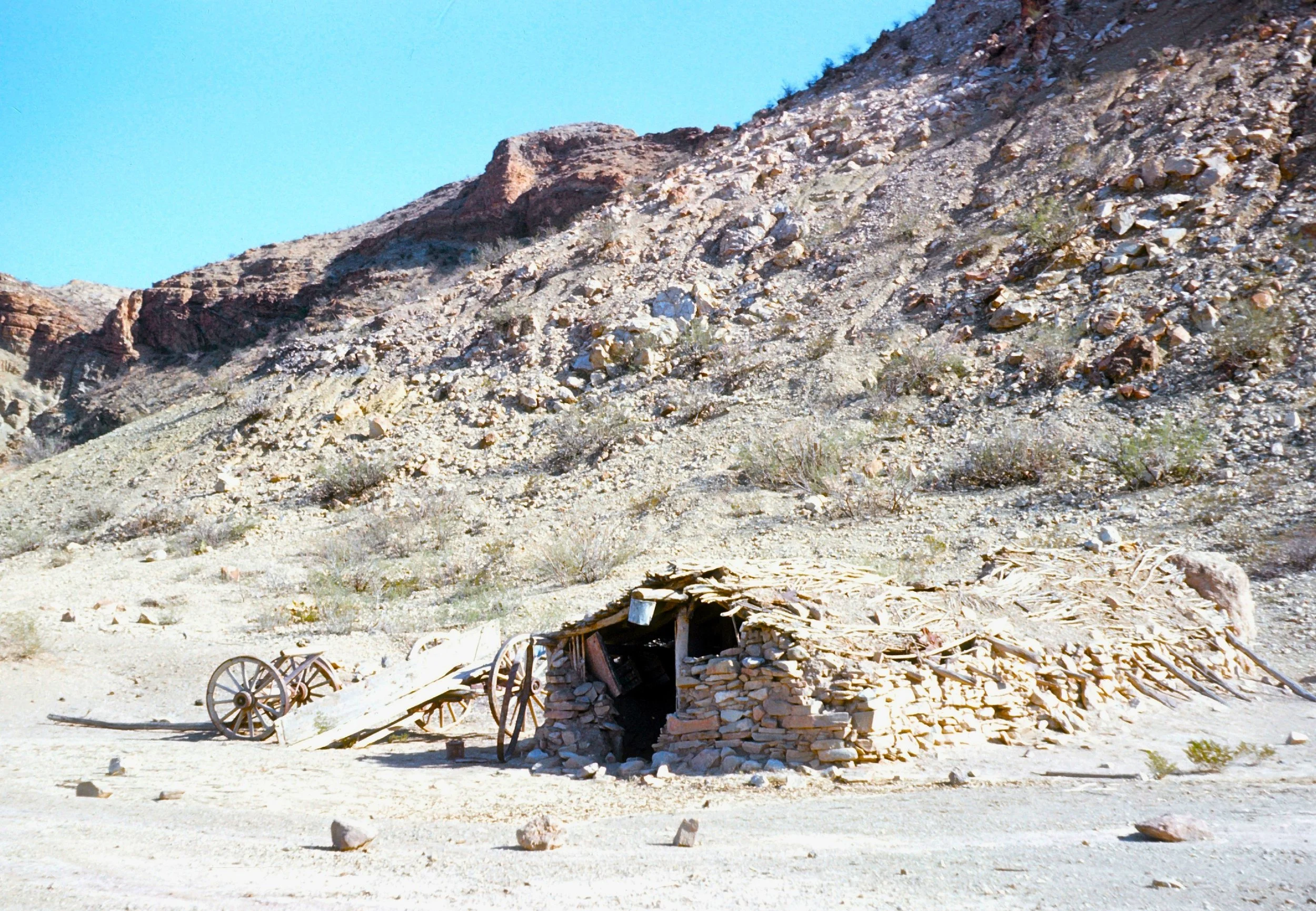
Gilberto Luna settled here in 1916 and raised a large family. They lived in this home in Big Bend until the 1940s, just a few years before this picture was made.
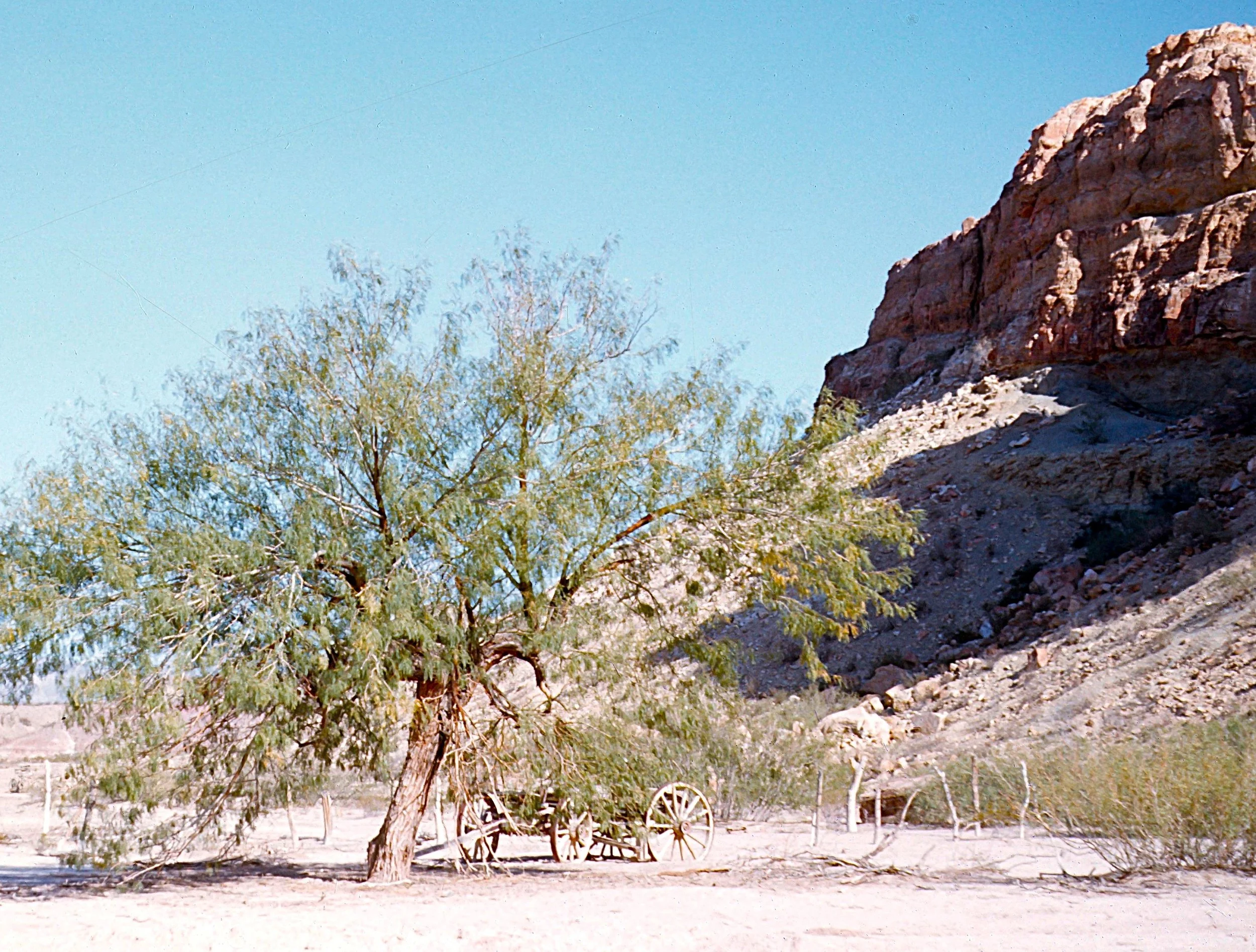
The Luna family wagon parked for the last time under this mesquite.
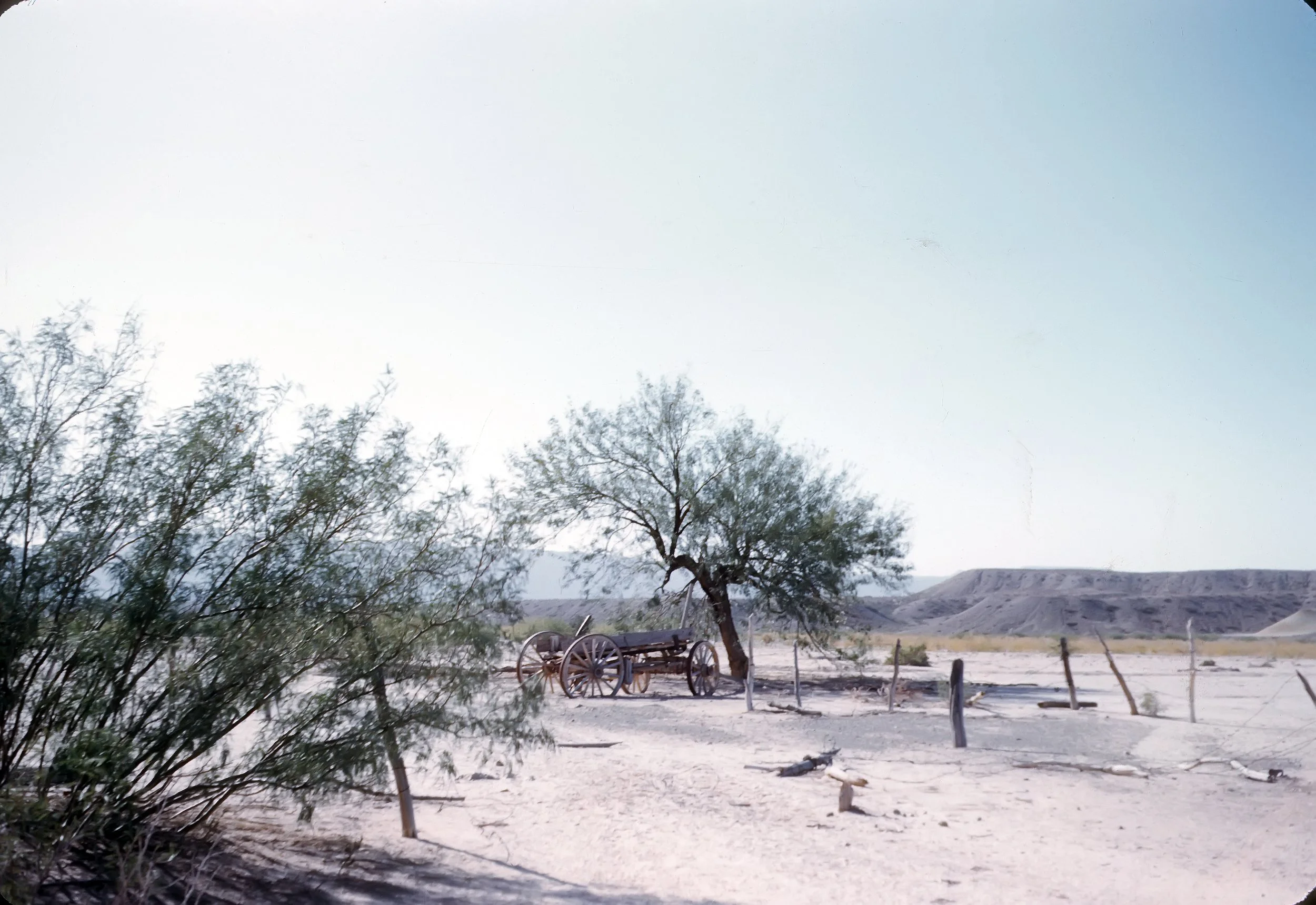
At the Gilberto Luna home place.
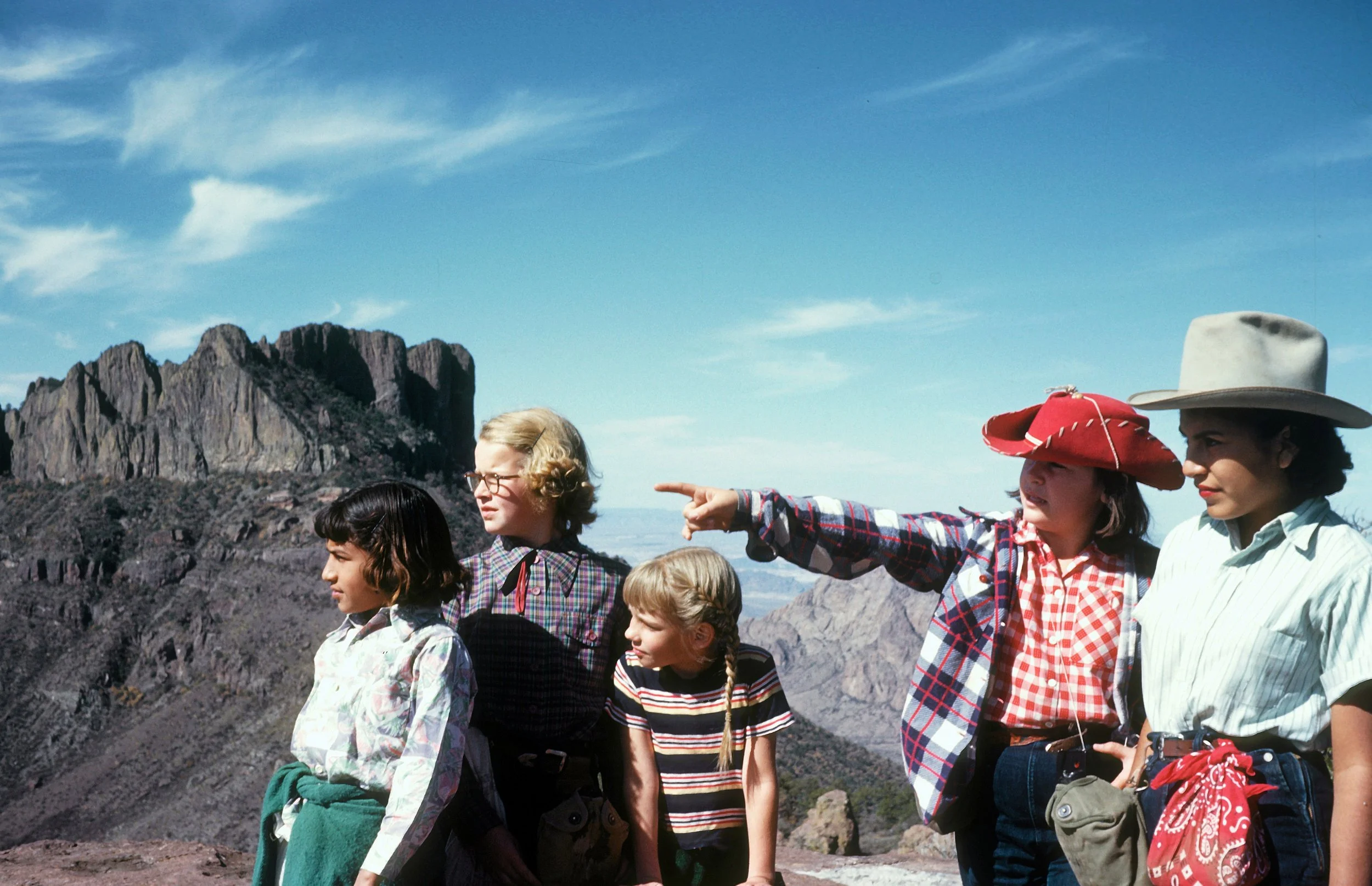
Aileen’s Girl Scouts on an expedition in the park. Her classroom included students of different ages and different grades.

The Boot, a landmark in Big Bend National Park.
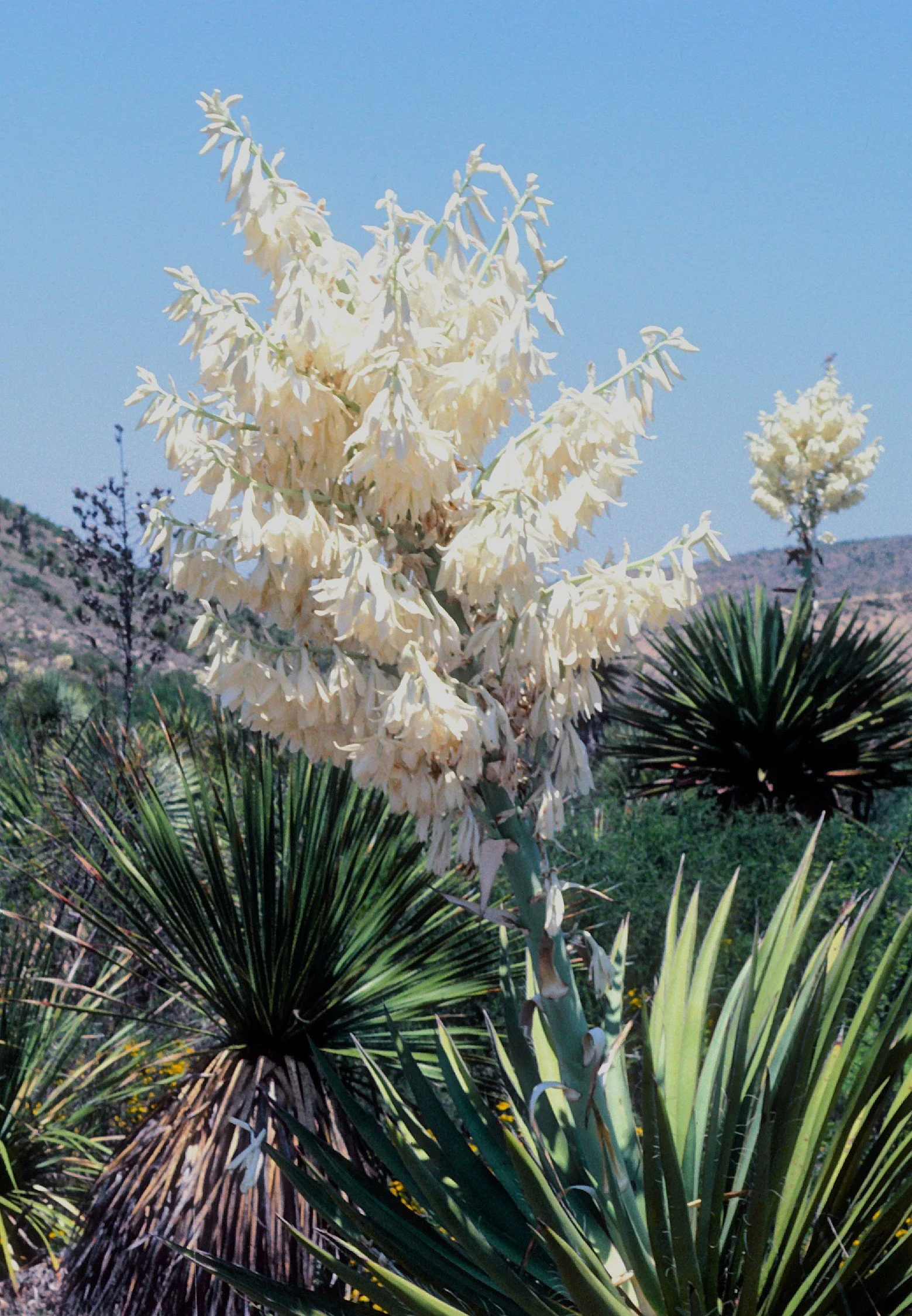
Soft, lush flowers contrast with dry spiny vegetation.
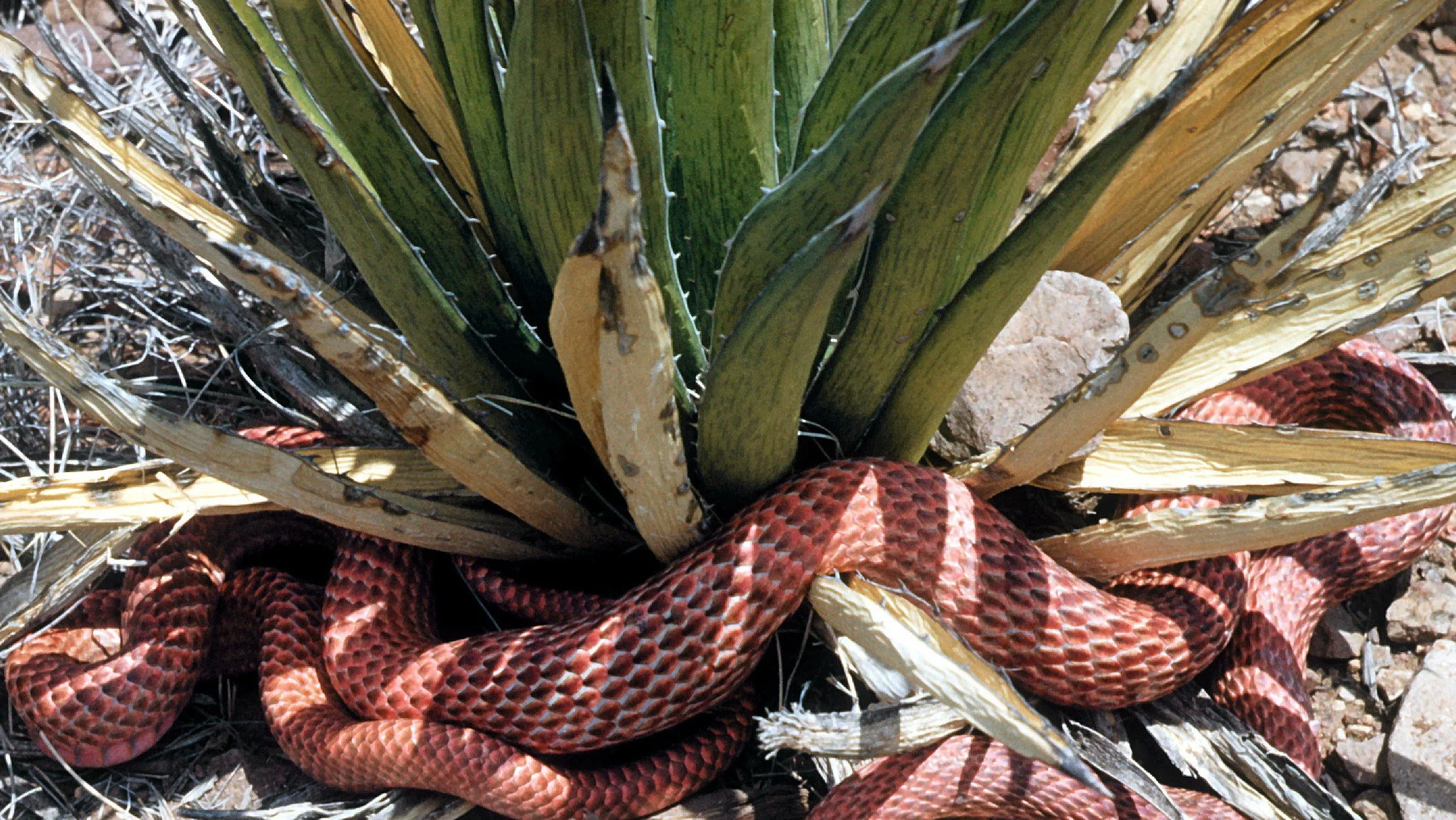
Red racer, a harmless resident of the park.
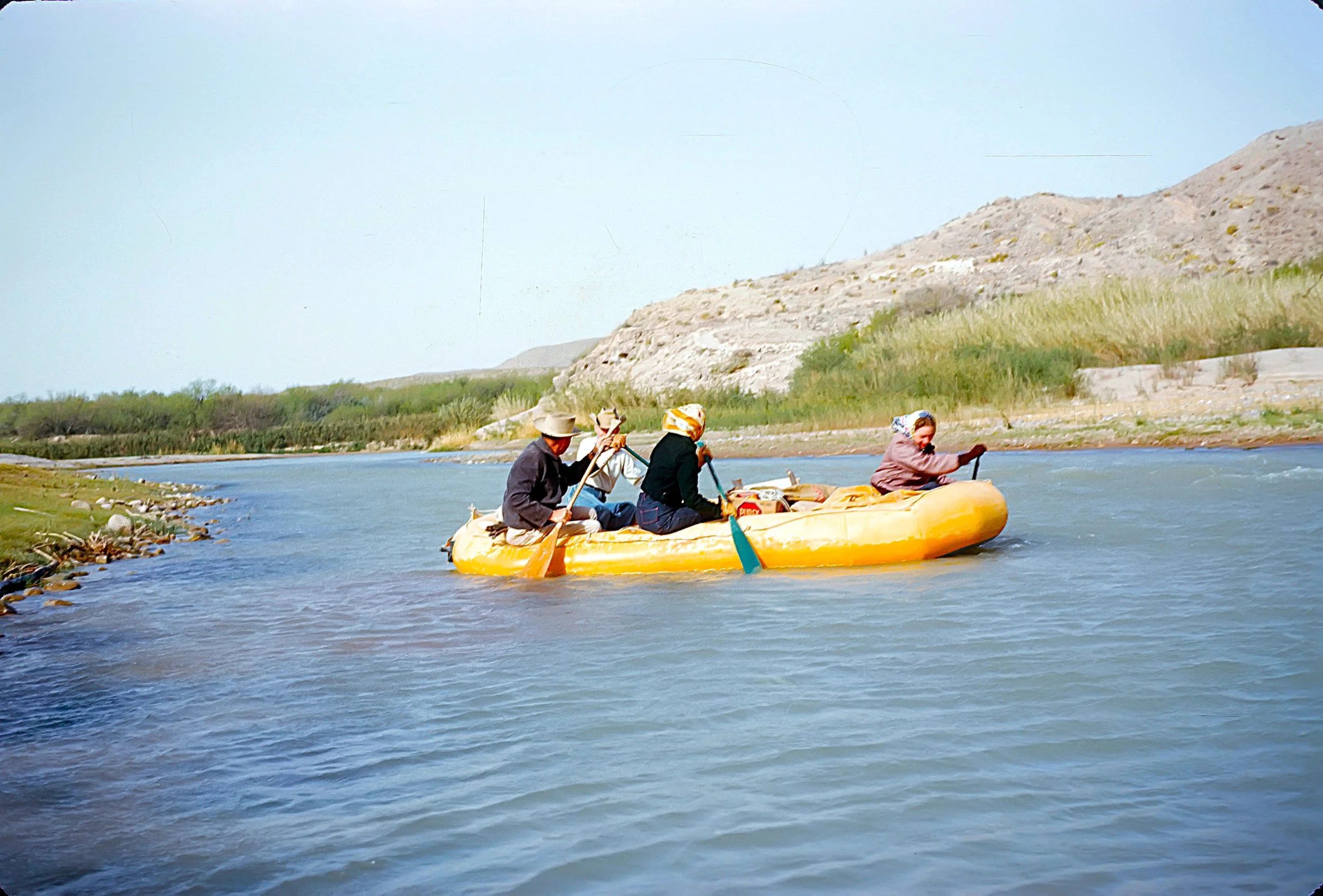
Aileen's rafting group sets forth down the Rio Grande in a leftover World War II life raft. Their supplies are in cardboard boxes.
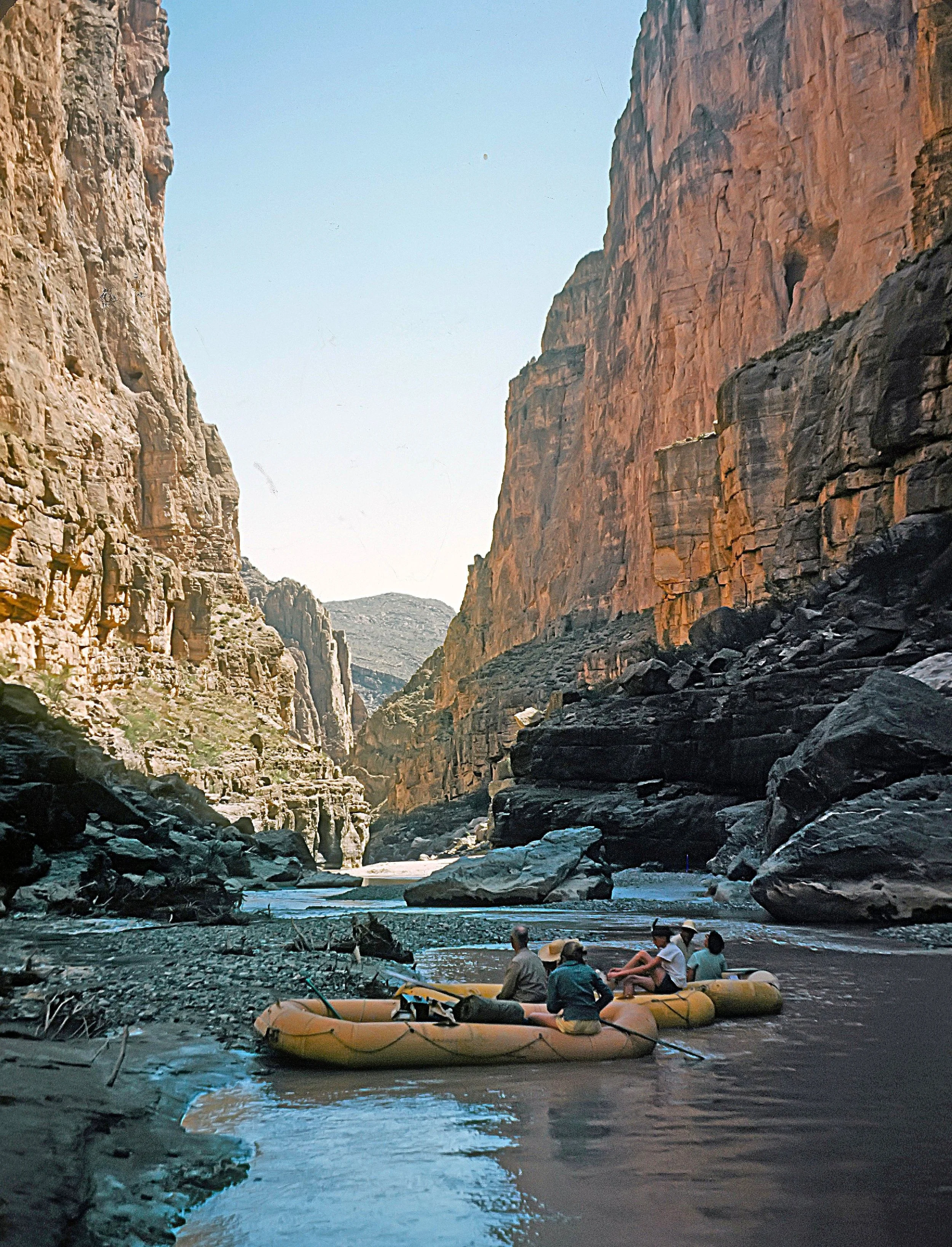
Aileen loved rafting through the canyons of Santa Elena and Mariscal.
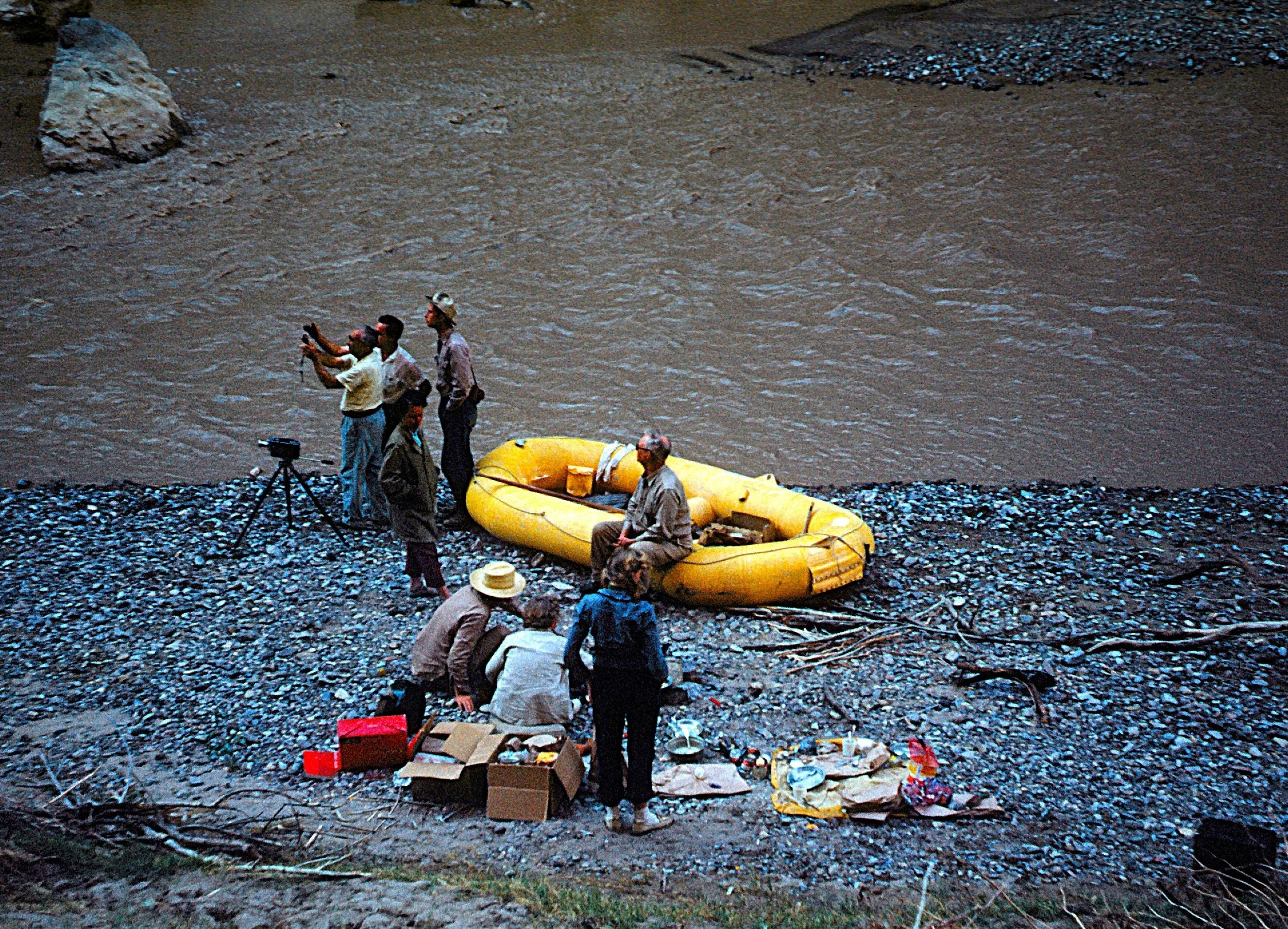
The rafters make camp. Only one rafting group that included a woman was known to have floated through before Aileen’s group.
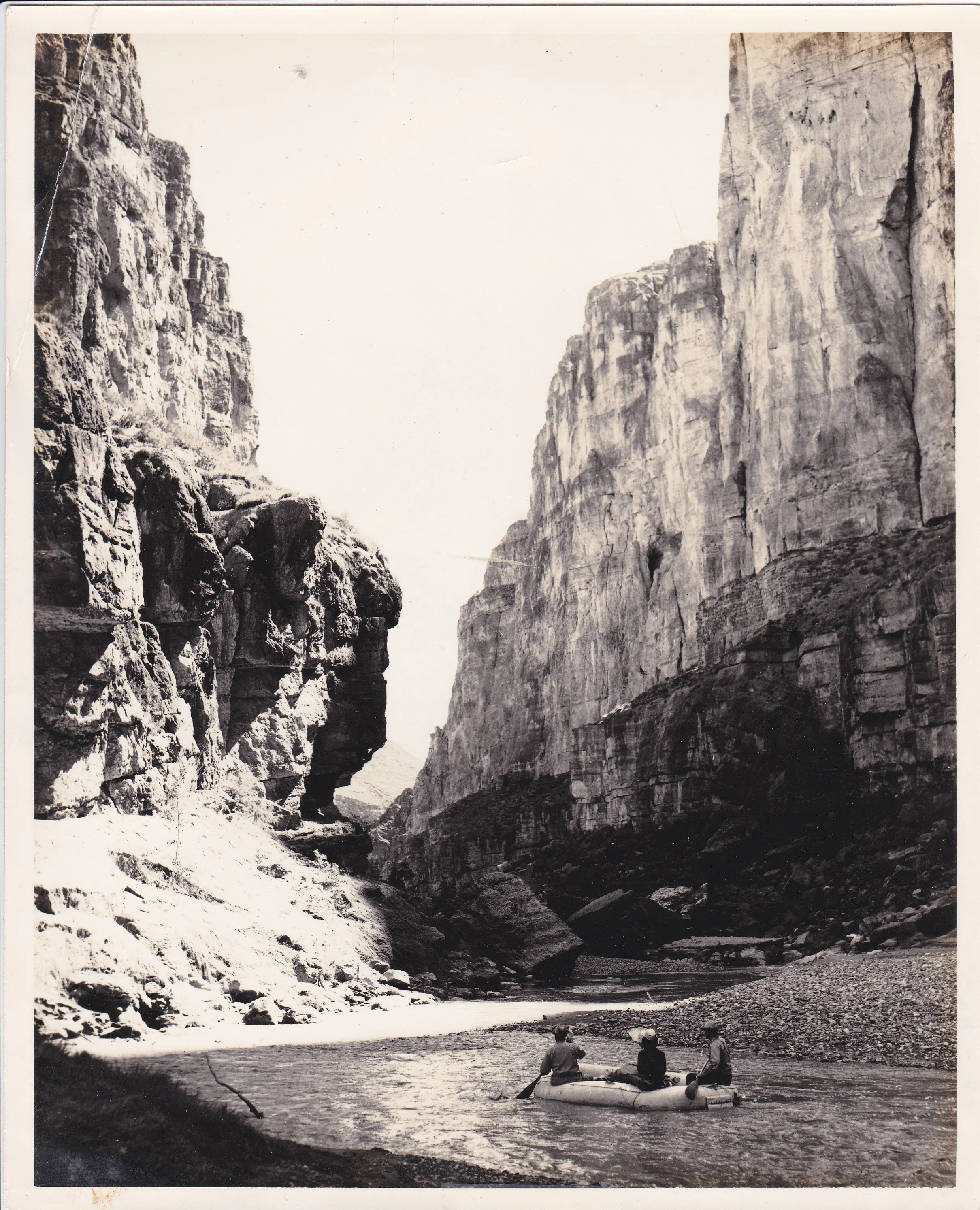
Easter morning 1954 in Mariscal Canyon. Aileen is in the wide-billed cap. Photo by Glenn Burgess.
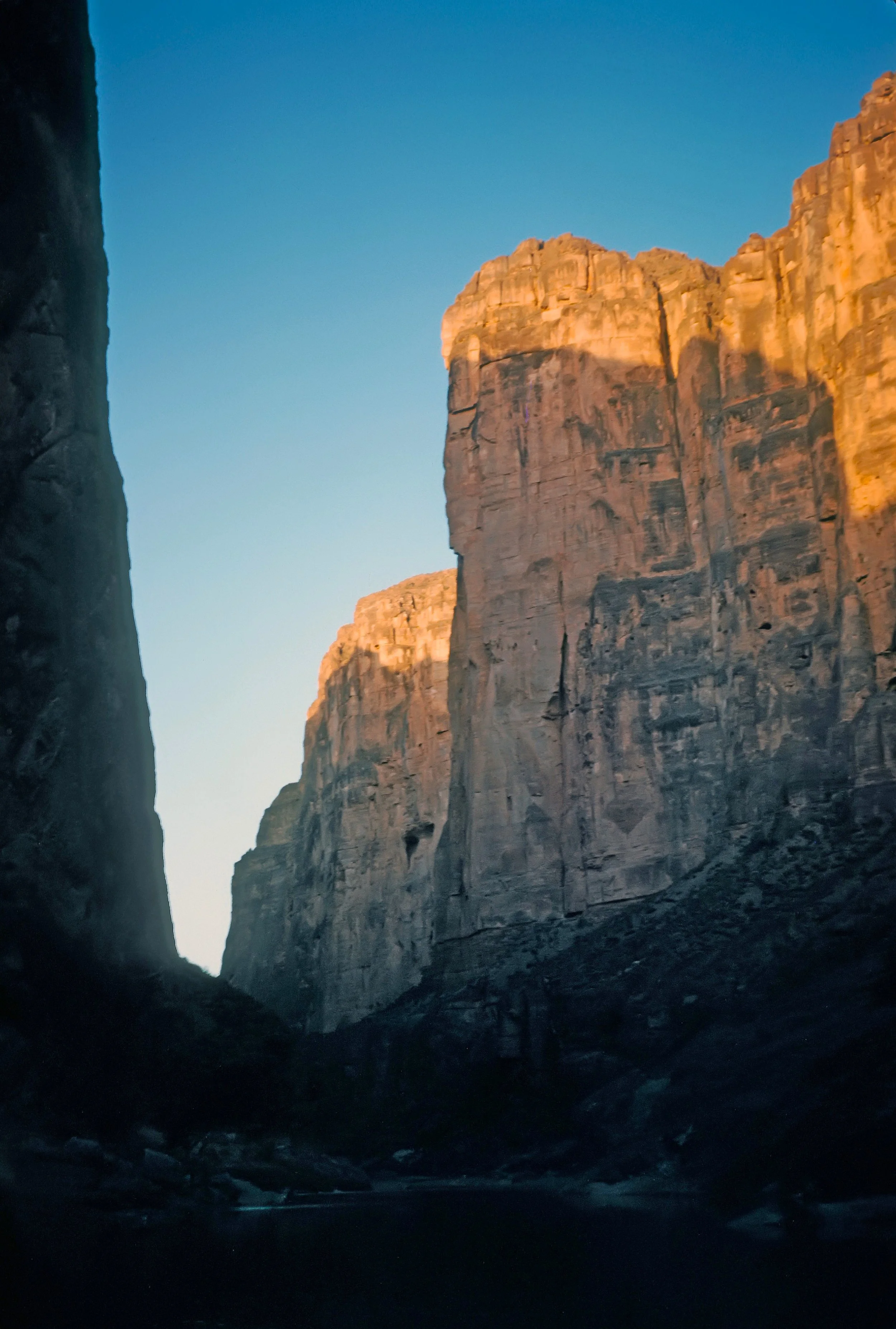
Once they began the float through a canyon, there was no escape except to continue to the end. The cliffs formed an impenetrable wall. Mariscal Canyon, April 1954.
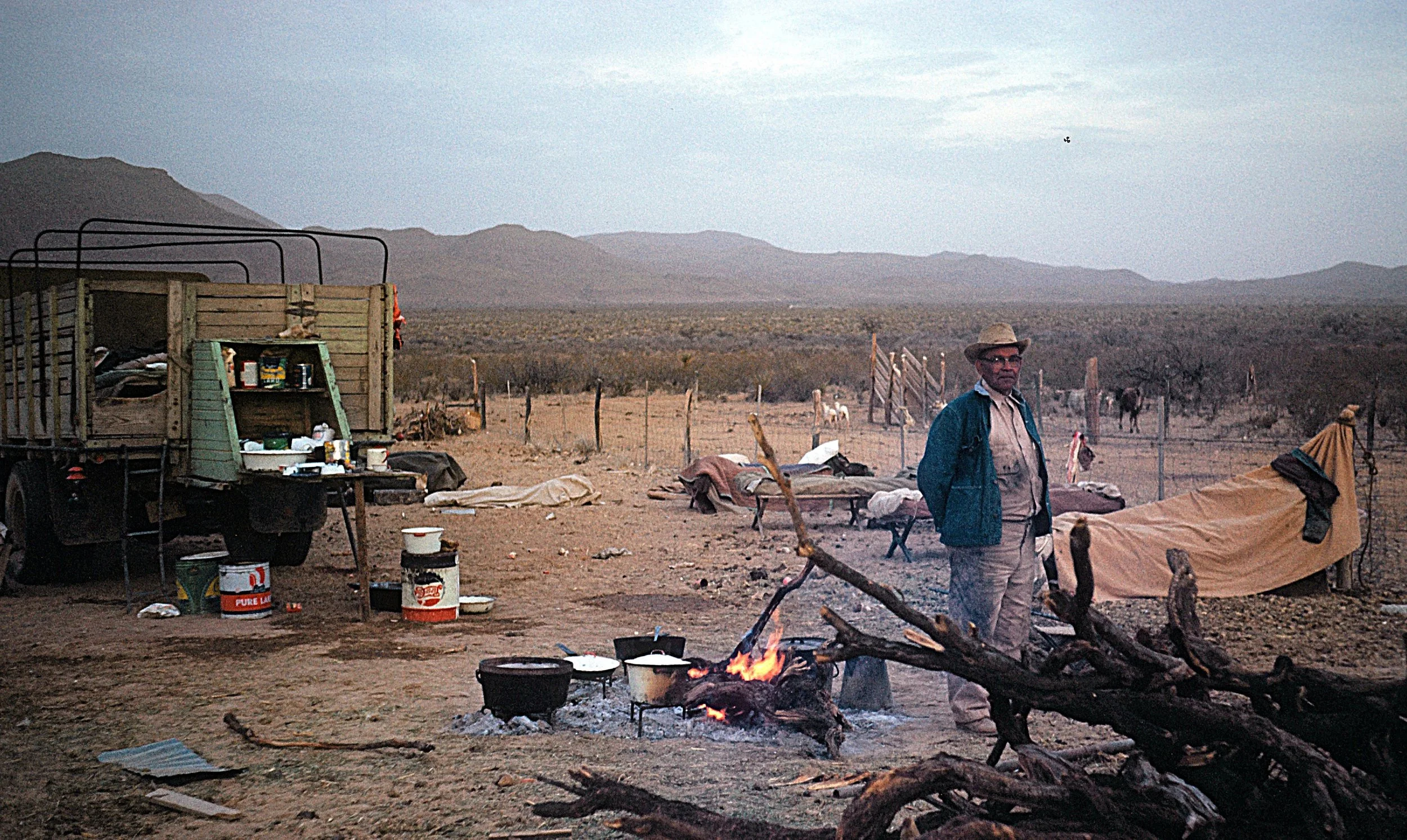
Sheepshearing camp, Gulliher Ranch, Rosillos Mountains.
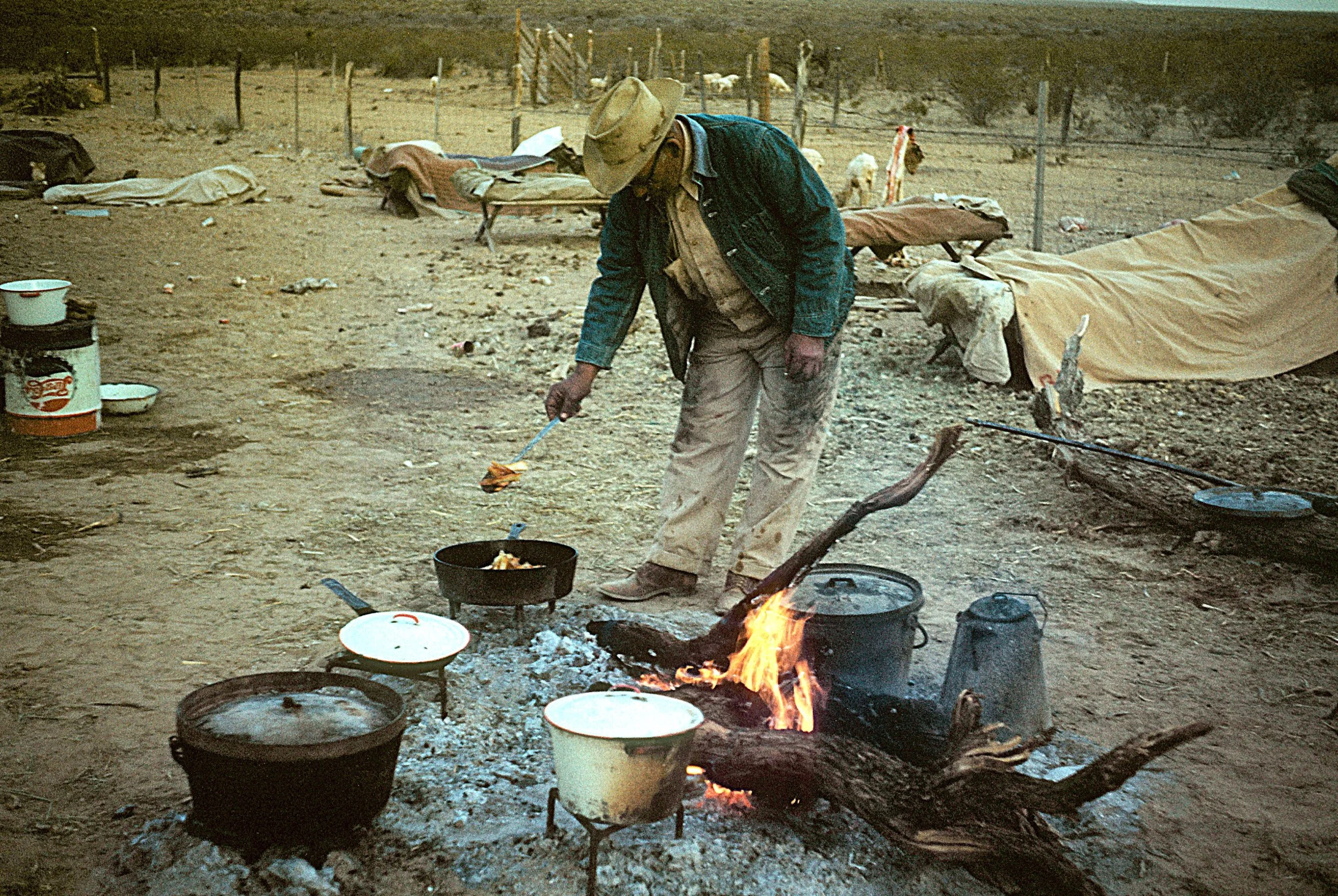
Wouldn't you like to gather round and join the crew for fried potatoes, beans, biscuits, and stew! Notice their bedrolls in the background.
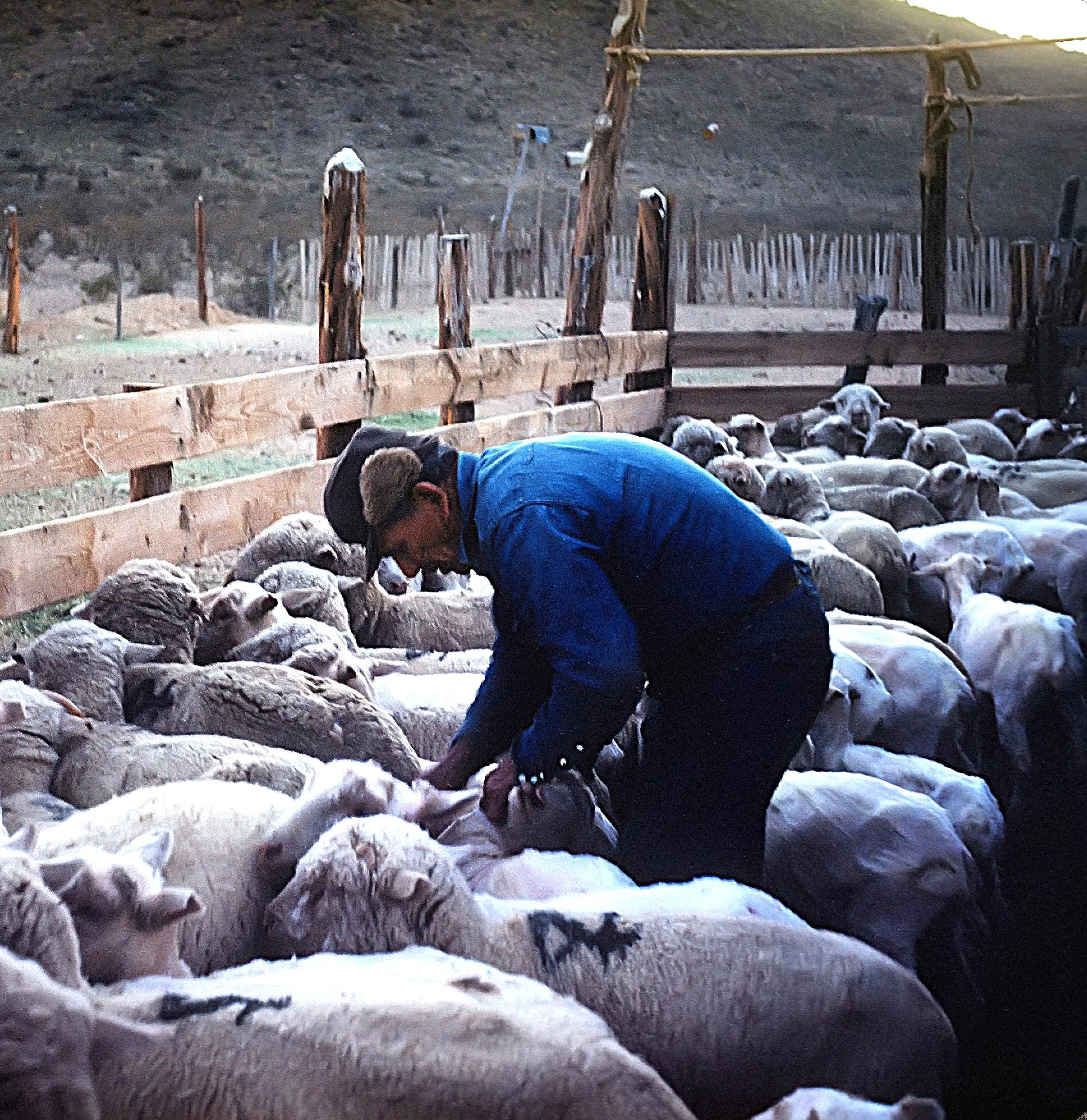
Shearing the sheep, Rosillos Mountains.
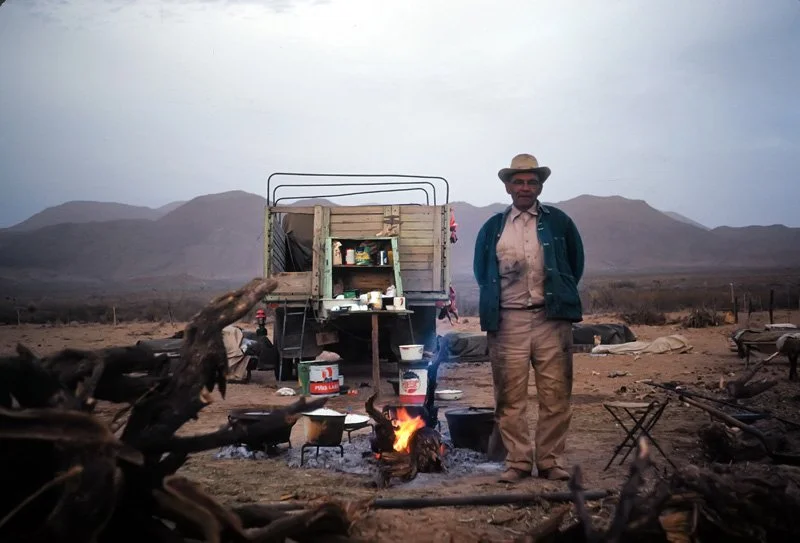
The chuck wagon, Gulliher Ranch, Rosillos Mountains.

The legendary Maggie Smith at her store shortly before she died. People from both sides of the border counted on Maggie when in need, to deliver a baby, arbitrate a dispute, or feed a hungry child. Aileen & daughter are on left. Jan. 1965.
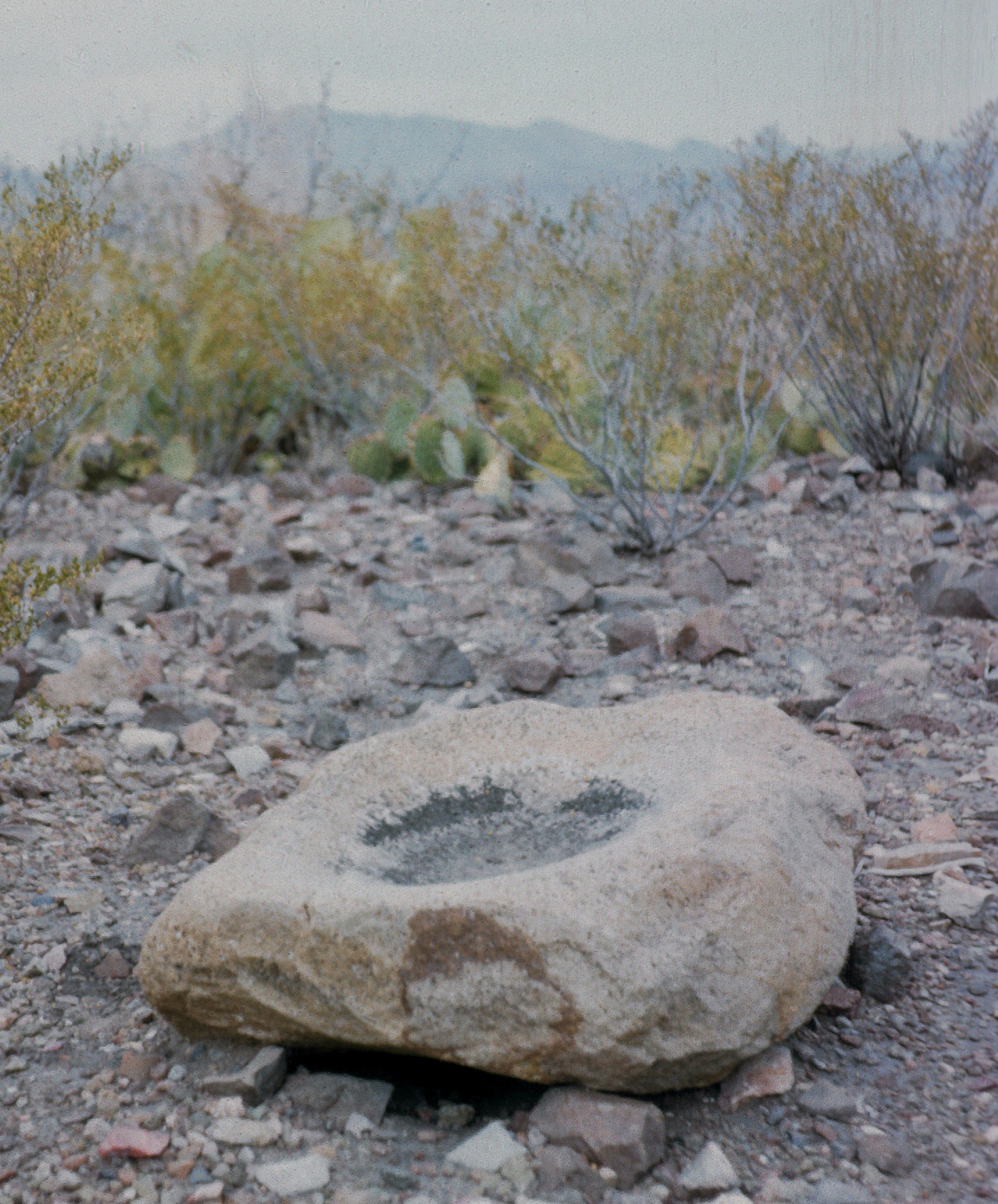
Signs of Big Bend’s original inhabitants were everywhere. Here, a grinding stone.
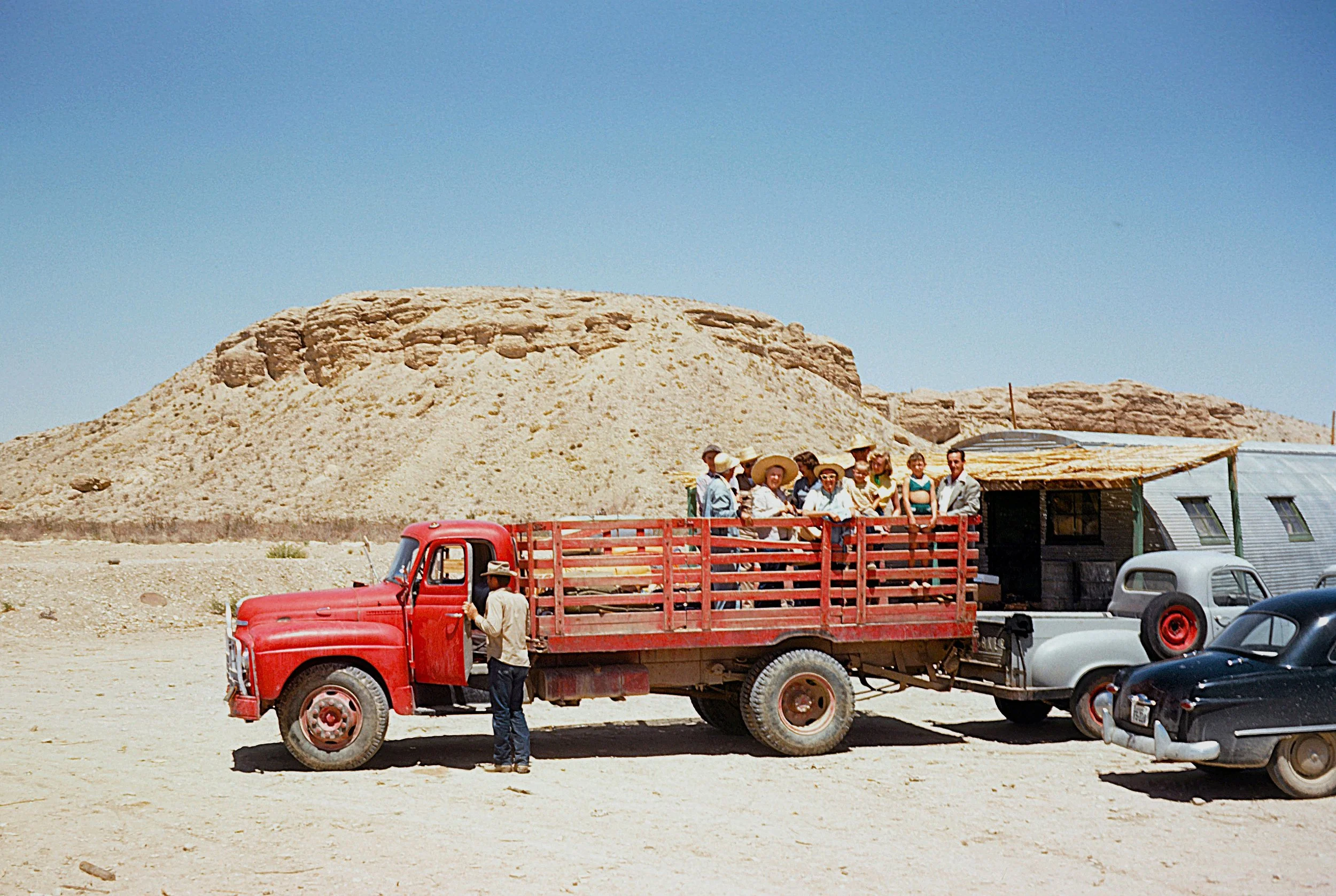
Mr. Drake’s truck, which ran on gasoline or butane. It had 15 gears and needed an oil change only every 30,000 miles. April 1954.

Old-time Big Bend resident Bob Cartledge at La Harmonia store with the Boots Dott family, January 1954. Don't miss the sleeping dog in lower left.

This artist painted Big Bend scenes while her husband worked in the park. Yes, that’s a six-shooter on her hip, as she painted in isolated places and had to be prepared for anything. Nov. 1953.

The historic Indian Lodge built by the Civilian Conservation Corps in the 1930s. Fort Davis, November 1953.

Aileen on the banks of the Rio Grande, dressed for a party. The Lajitas barbecue was a famous event and everyone showed up for it.
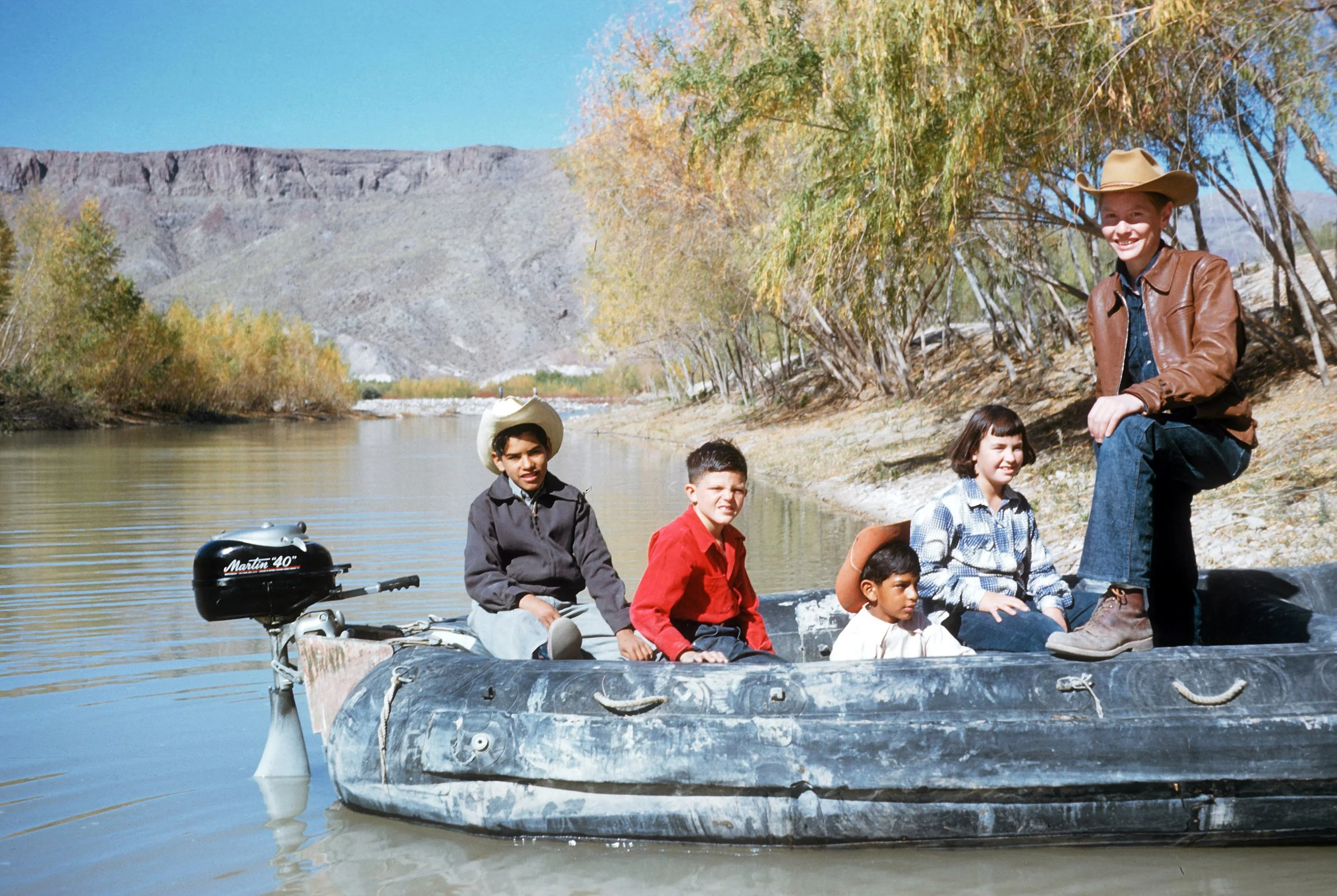
Some of Aileen’s students going for a river cruise at Lajitas, December 1953. One riverbank is Mexico, the other is U.S.

The cooks at the Lajitas barbecue, December 1953: Art Minish, Rex Ivey, and a river rider.

At the Lajitas barbecue day.

Catholic mission chapel at Lajitas. Photo taken December 1953.
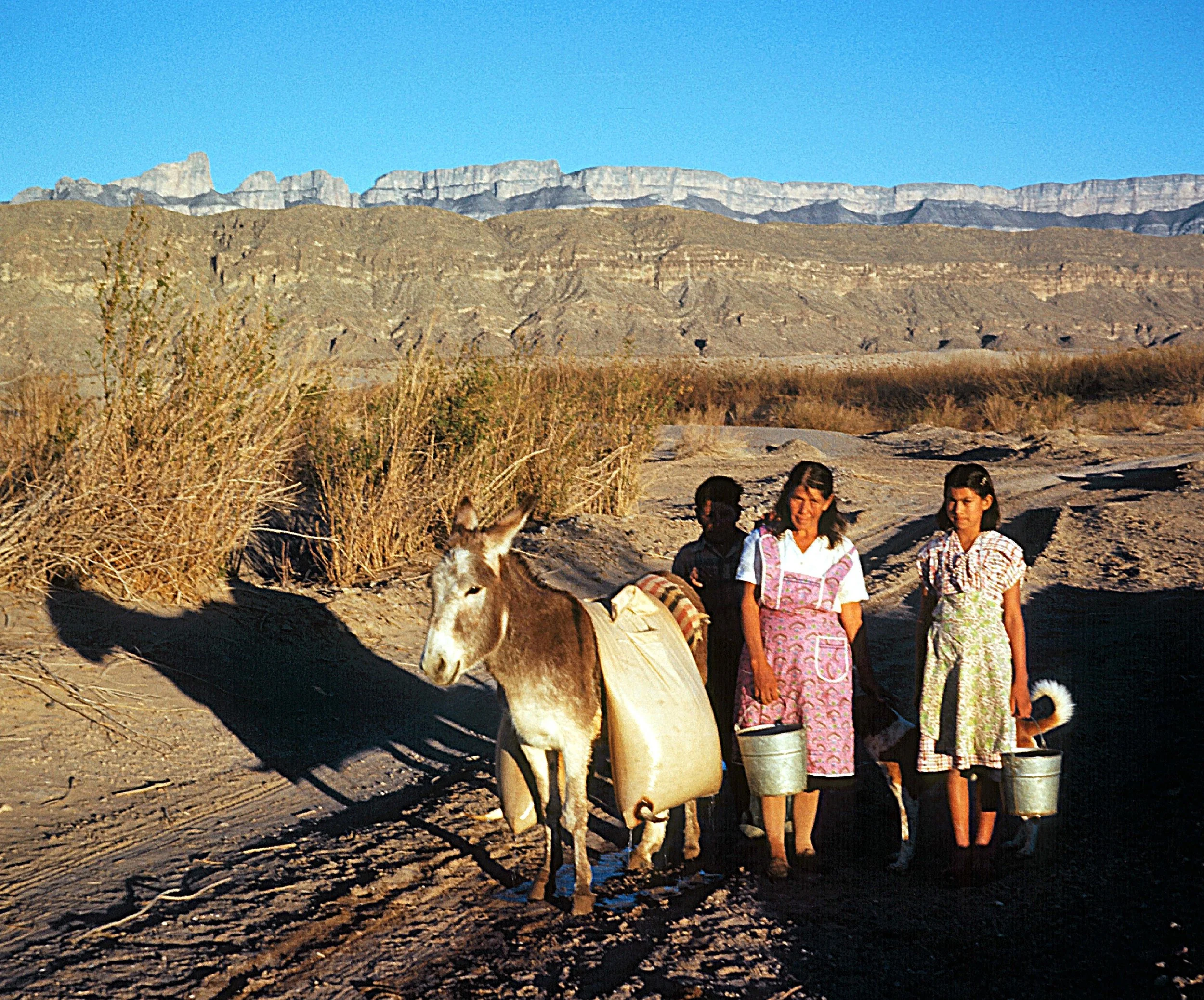
A family with their burro transporting water from the Rio Grande to their home in Mexico. Aileen described the waterbags: woven of lechuguilla, with a cow horn as a stopper.
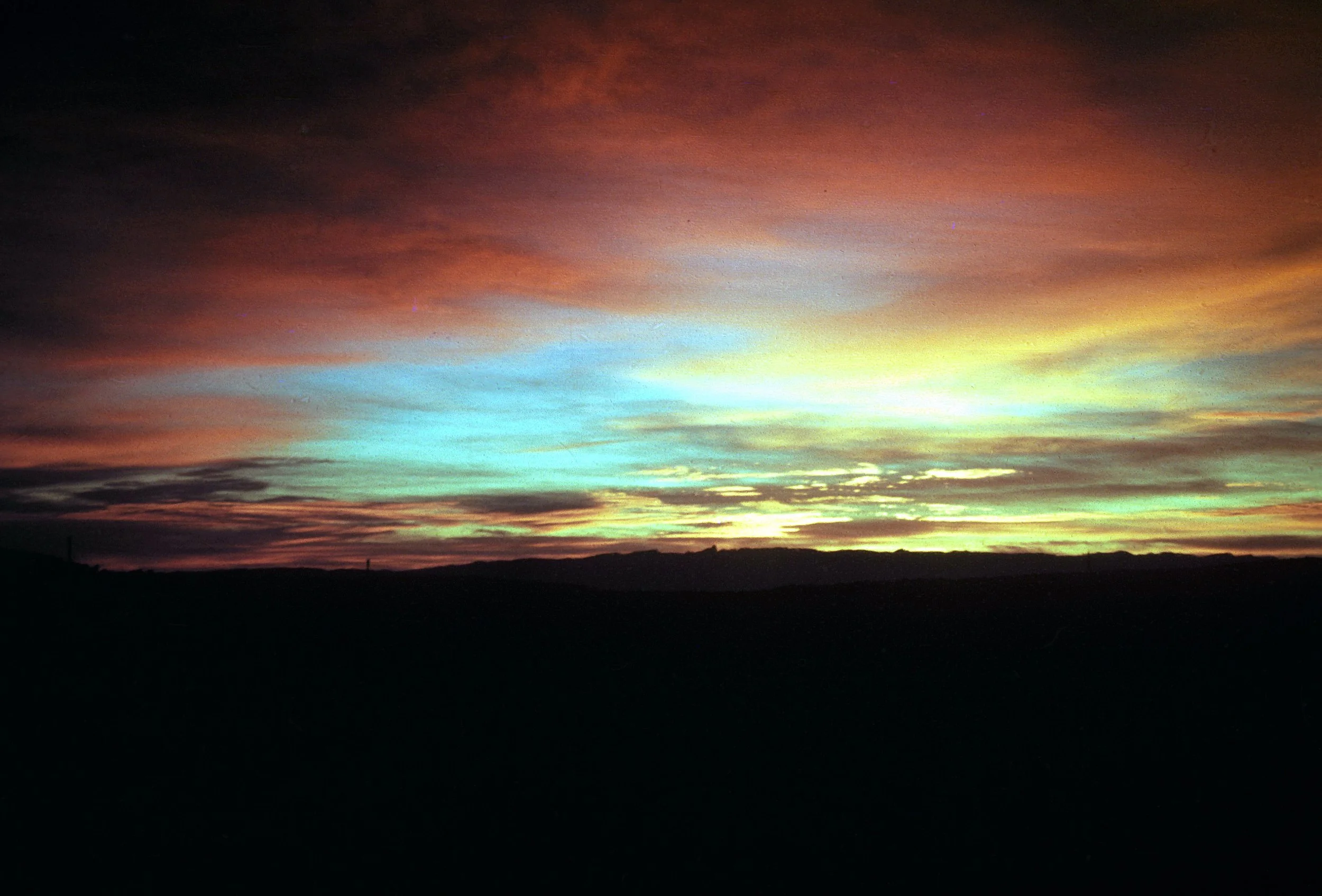
The ever-changing skies of Big Bend.
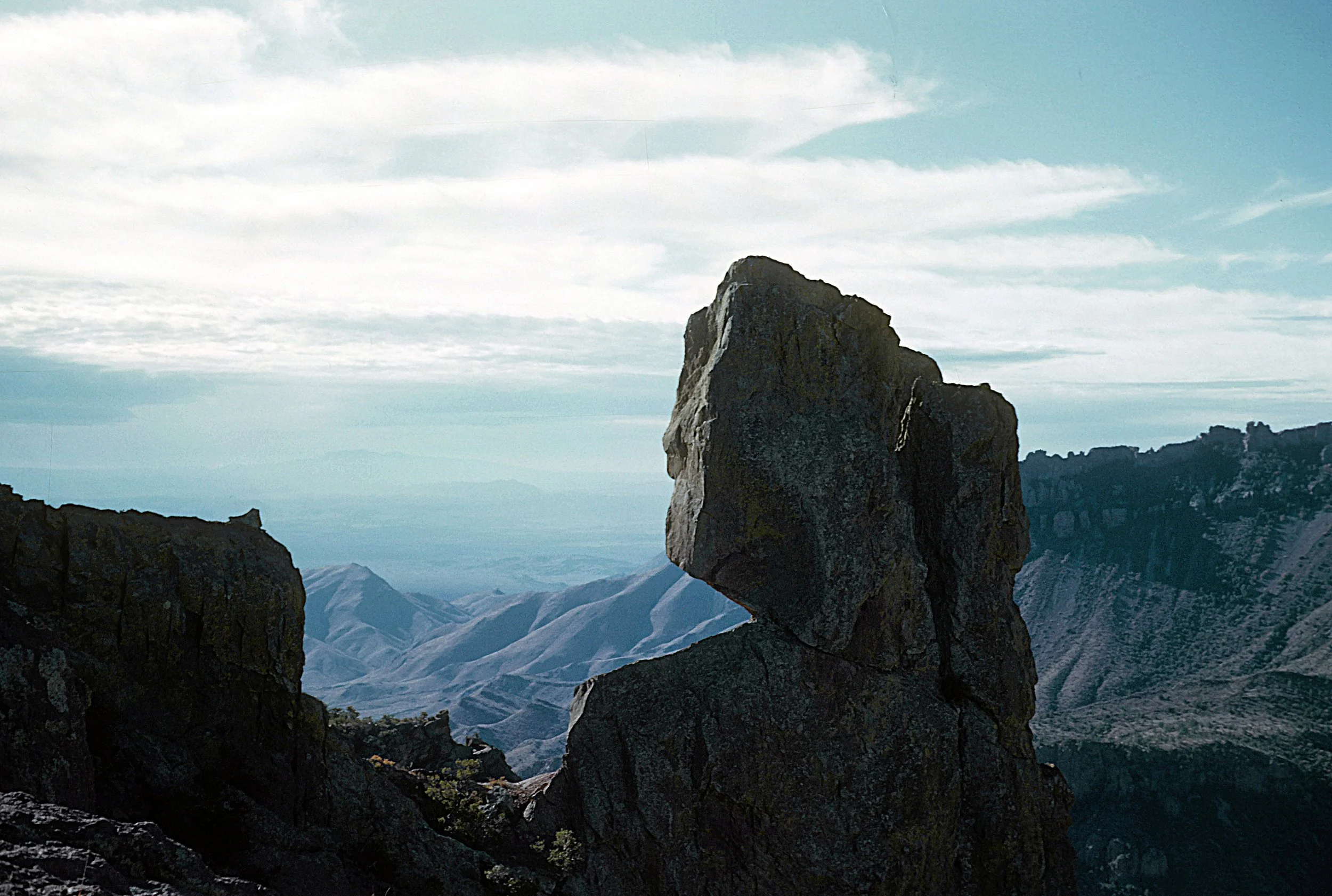
In Aileen's middle-grade adventure novel Treasure of Panther Peak, her characters must find their way through landscapes like this.
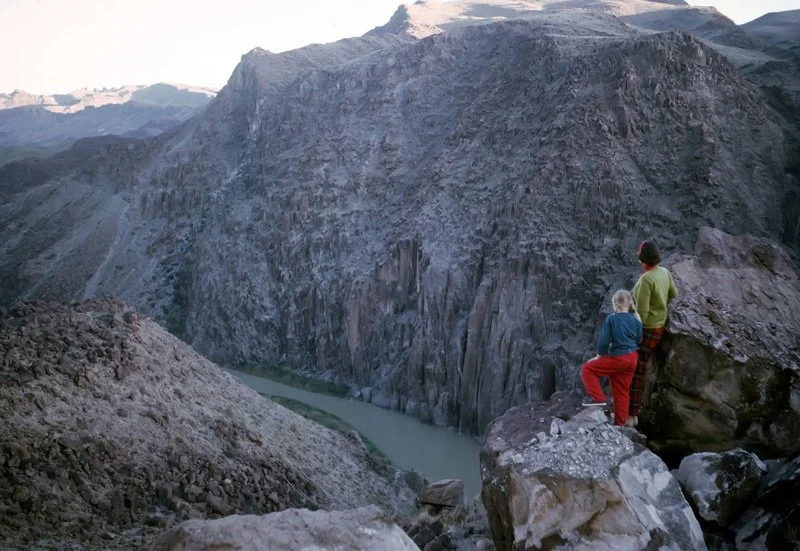
Aileen and daughter look down on the Rio Grande on a return visit in 1965.
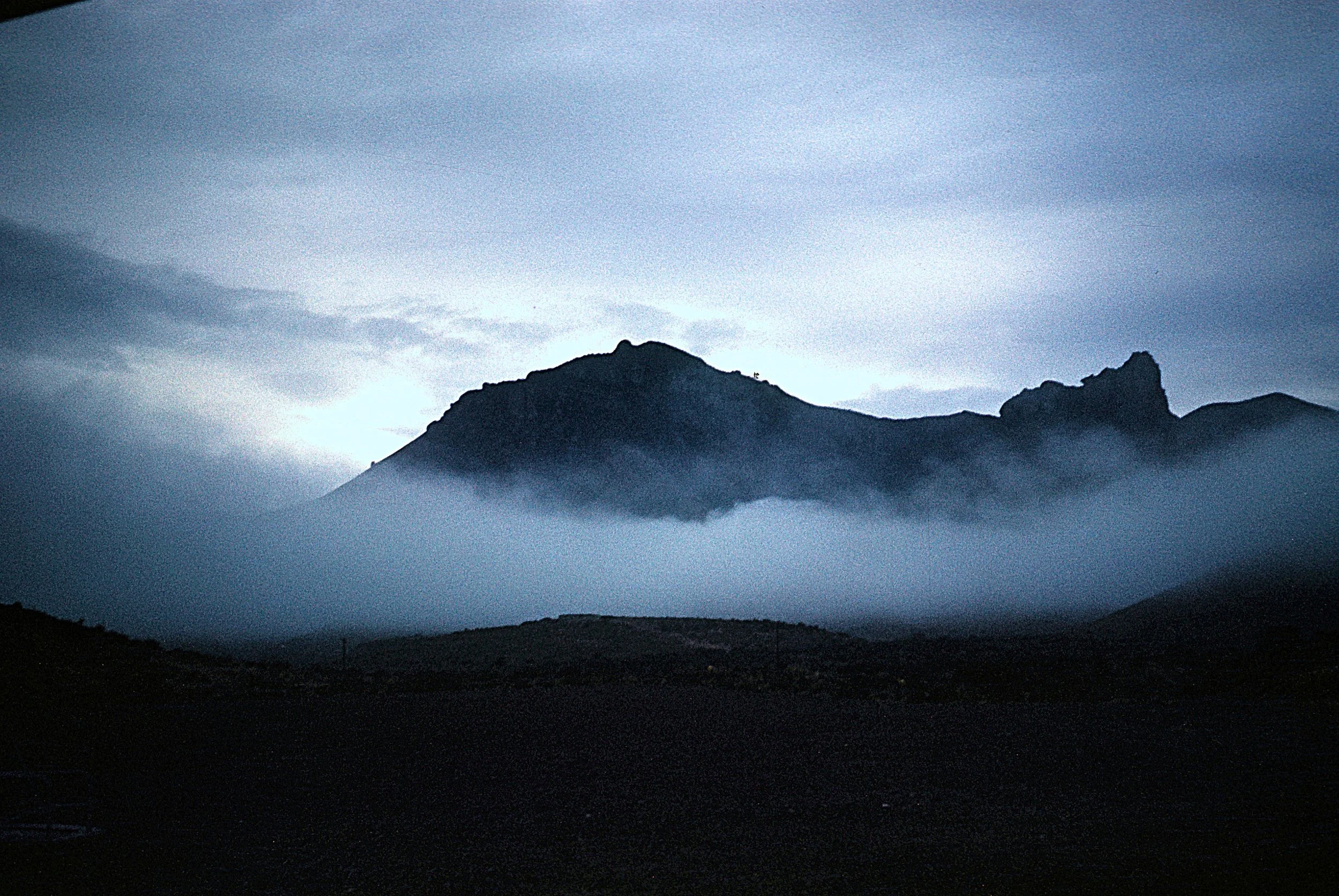
Low-lying mist in the canyons.
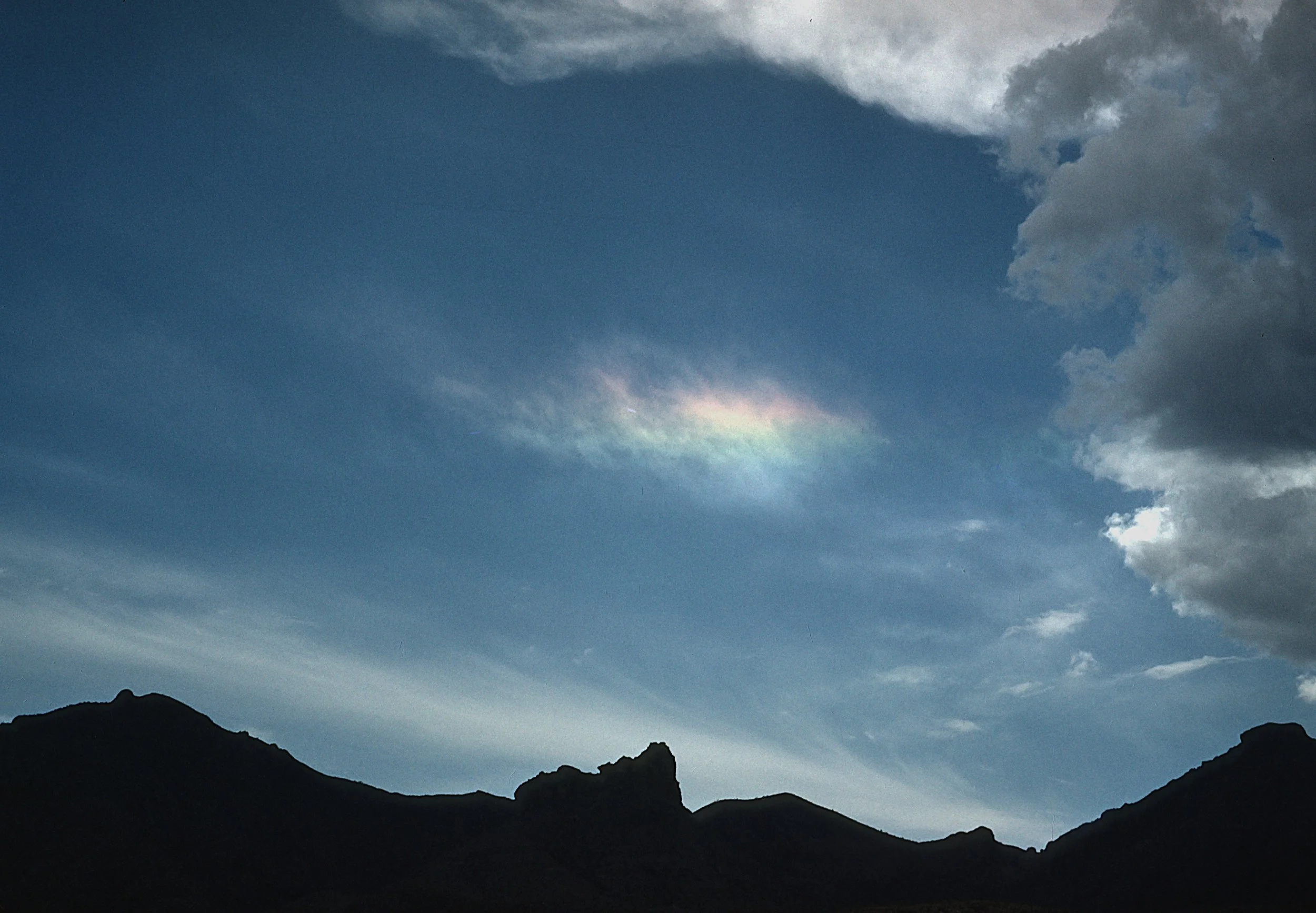
Rainbow cloud, which plays a role in Aileen's middle-grade novel Treasure of Panther Peak.

Sunset in the Big Bend.